Nigeria's economic landscape presents a tale of two realities, as revealed by recent data. While the federal government touts an easing of economic pressure with headline inflation dipping to 15.10 percent, residents of Benue and Kogi states are experiencing a starkly different situation. The national average, it appears, masks significant regional disparities.
A staggering 13.76 percent gap separates Nigerians in the most expensive state from those in the most affordable. Benue, the 'Food Basket of the Nation', is grappling with the highest inflation at 22.48 percent. In contrast, its south-eastern neighbor, Ebonyi, enjoys a much lower inflation rate of just 8.72 percent. This divergence highlights the emergence of two distinct Nigerias, as evidenced by the latest NBS data.
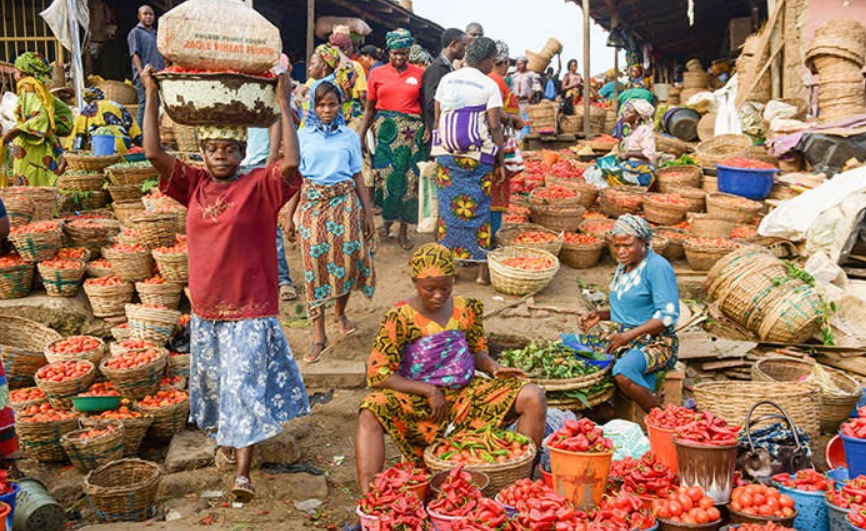
In Benue, a market survey by BusinessDay reveals the extent of the crisis. One hundred tubers of yams now sell for roughly N200,000, a massive increase from the average of N30,000 just months ago, marking a rise of over 200 percent. A 50kg bag of local rice now costs an average of N75,000, compared to N50,000 previously.
Kogi State, with Lokoja as its capital, recorded a food inflation rate of 19.84 percent. A market trader lamented, 'We are farmers, but we cannot afford to eat what we grow. The middlemen tell us transportation has doubled. By the time food reaches the market, it carries the price of a journey it never should have taken.'
However, in Abakaliki, Ebonyi State, food inflation stands at a mere 1.69 percent. A resident noted, 'Food is cheaper here now. Rice, garri, vegetables, prices have come down. But we wonder how long it will last, and we hear our brothers in Benue are suffering. How can the same country produce such different stories?'
Investigating the Disparities
The Middle-Belt Factor: Insecurity & Logistics
Transport operators and market leaders attribute the high prices in food production hubs like Benue and Kogi to logistics challenges. Desmond Tivkaa, an agro-commodity middleman in Benue, points to illegal revenue checkpoints mounted by government or security personnel, which contribute to the surge in food prices.
Okoh Amuta, a haulage operator with over 20 years' experience, described his profession as a gamble due to poor road infrastructure, chaotic truck queues, and security checkpoints. A delivery from Lagos to Ilorin, typically a two-day journey, stretched into four days, causing penalties and tarnishing trust with clients.
Anande Innocent, a livestock dealer in Otukpo, Benue State, ordered 15 goats from Plateau State. The journey took five days instead of the usual 36 hours, resulting in the death of eight goats due to the deplorable state of inter-state roads.
On February 19, 2026, Benue yam farmers lost their entire harvest when a truck loaded with yams from Zaki Biam crashed along the Makurdi-Lafia road. This was the third such incident this year, causing a complete loss of weeks of labor and financial hope for the farmers.
Tony Akunna of Ekene Dili Chukwu Haulage noted that police checkpoints on eastern routes are excessively numerous, causing delays and forcing drivers to park and sleep before continuing their journey.
The Ebonyi Exception: State-Level Policy
Ebonyi has recorded the lowest food inflation in the country at just 1.69 percent. Stakeholders attribute this to aggressive production drives encouraged by the government, with civil servants, politicians, and private individuals embracing farming.
Michael Udenwe, CEO of UGREEN Integrated Farm in Abakaliki, stated that about 95 percent of Ebonyi people are farmers, leading to a surge in output during the 2025/2026 farming season.
However, Udenwe blames the drop in external demand on multiple taxation and strict revenue enforcement. He also noted that rising transportation costs have worsened the situation. 'If you buy a bag of rice at N15,000, transporting it out of the state can take almost half of that amount.'
Udenwe warned that the current glut could trigger a future crisis, as 25 percent of farmers may not return to farming in 2026 due to low prices and high production costs. Fertilizer that sold for N11,000 in 2023 now goes for N50,000. Herbicides have tripled. He fears farmers borrowing N2 million may not get N1 million back, facing jail or the sale of their property by the bank.
The Abuja Premium: Services and Urbanisation
In the Federal Capital Territory, inflation remains high at 19.25 percent, but food prices are actually falling. The FCT posted food inflation of 11.7 percent in January, down from 13.2 percent in December. The “Abuja Premium” appears driven by the services sub-index, with the cost of convenience, imported goods, and urban living remaining stubbornly high.
The Month-on-Month Anomaly: A Warning Sign
While the national trend is downward (-2.88 percent), Imo and Ondo saw prices increase by nearly two percent in January alone.
Muda Yusuf, CEO of the Centre for Promotion of Private Enterprises (CPPE), highlighted the importance of transport costs, security conditions, and supply-chain efficiency in price formation.
The Human Bottom Line
In Lokoja, Kadir Abu expressed frustration that his money buys less each time he goes to the market, despite claims of falling inflation. In Abakaliki, Michael Udenwe warned that farmers are in serious pain despite cheaper food prices, potentially leading to future scarcity.
The data reveals a country fragmenting along economic lines. Policymakers must recognize that a national solution will not suffice for a nation with such stark regional realities. Solutions must be localized to address the specific challenges in Makurdi, Lokoja, and Abakaliki.