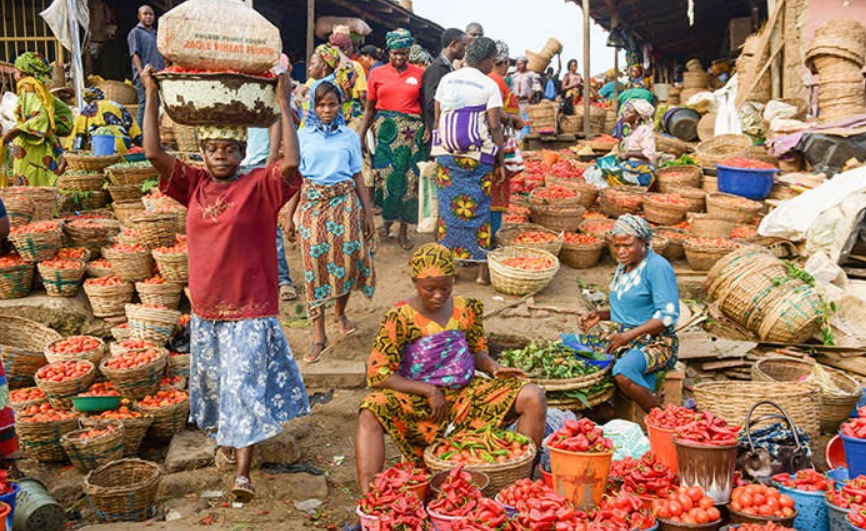
Poverty Rate Climbs to 63%
Former Anambra State Governor Peter Obi has attributed the sharp increase in Nigeria's poverty rate to the economic reforms implemented by President Bola Tinubu's administration. On March 16, Obi stated on his official X account that these reforms have exacerbated poverty levels across the nation.
A recent policy study by Agora Policy, supported by the Nigeria Economic Stability and Transformation Programme and the UK Foreign, Commonwealth and Development Office, revealed that the poverty headcount has climbed from a baseline of approximately 49.8% to around 63%. This indicates that over 140 million Nigerians are now struggling to afford basic necessities.
The study presented at a stakeholders’ dialogue in Abuja found that household consumption declined following the removal of the petrol subsidy and adjustments to electricity tariffs. However, social protection measures have helped mitigate the impact, particularly for low-income households.
Food Inflation Returns to Double Digits
Nigeria's food inflation rate rebounded to 12.12% year-on-year in February 2026, pushing the indicator back into double digits after a notable drop to 8.89% in January 2026. This represents a 3.23 percentage point increase month-on-month.
Despite this recent increase, the February food inflation rate is significantly lower than the 26.98% recorded in February 2025. The National Bureau of Statistics (NBS) attributed the rise to increased prices of commodities such as beans, carrots, okazi leaf, cassava tuber, crayfish, millet flour, yam flour, snails, and cow peas.
On a month-on-month basis, food prices saw a 4.69% increase in February 2026. The average annual food inflation rate for the twelve months ending February 2026 stood at 19.08%, a substantial decrease from the 37.40% recorded in February 2025.
Headline Inflation Moderates, Monthly Pressures Rise
Nigeria's headline inflation rate eased marginally to 15.06% in February 2026, down from 15.10% in January 2026, according to the NBS. While the annual rate shows a slight decrease, monthly price pressures have intensified.
The month-on-month headline inflation rate rose to 2.01% in February 2026, a sharp increase compared to the -2.88% recorded in January 2026. This acceleration in monthly price increases signals renewed inflationary pressures.
Urban inflation stood at 15.53% year-on-year, down from 28.49% in February 2025, while rural inflation was 13.93% year-on-year, compared to 22.73% in February 2025. However, both urban and rural areas experienced increased monthly inflation, with urban inflation rising to 2.55% and rural inflation to 0.71% in February 2026.
Core inflation, which excludes food and energy, also followed a similar trend, decreasing year-on-year to 15.88% from 25.66% in February 2025, but increasing month-on-month to 0.89% from -1.69% in January 2026. The twelve-month average core inflation rate was 22.00%, down from 27.25% in February 2025.
State-Level Disparities in Food Prices
Food inflation varied significantly across Nigerian states in February 2026. Kogi recorded the highest year-on-year food inflation at 26.91%, followed by Adamawa at 23.12% and Benue at 21.89%.
Conversely, Katsina experienced the slowest food price increase at 5.09%, with Bauchi and Imo following at 7.09% and 7.65% respectively. On a month-on-month basis, Bayelsa saw the largest increase in food prices at 8.81%, while Katsina recorded a slight decline of -0.70%.