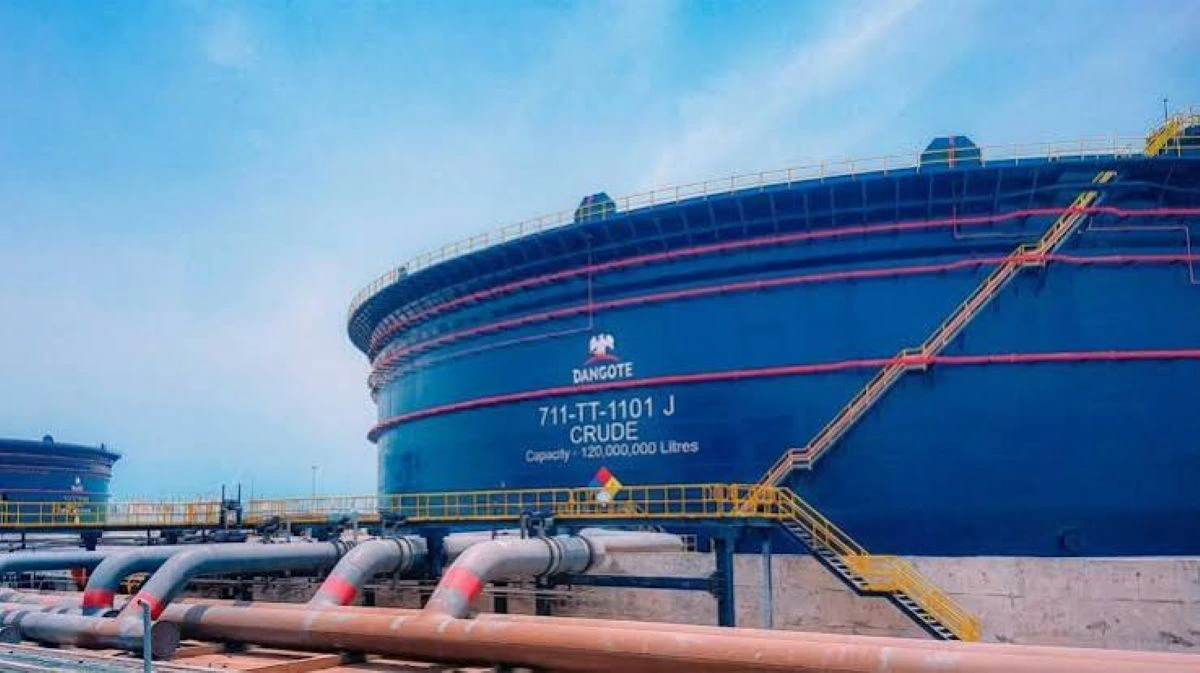
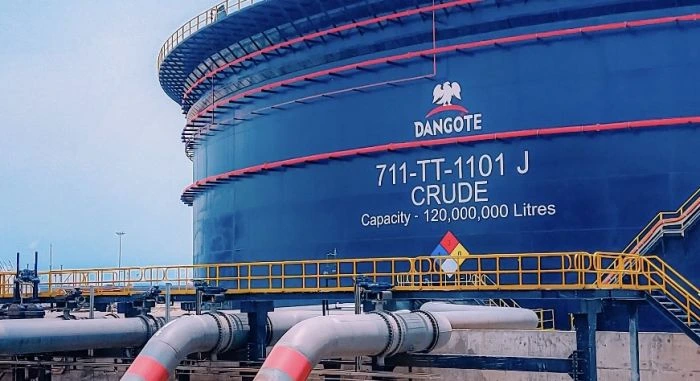
Dangote Petroleum Refinery’s offshore marine terminal has achieved approximately 1,100 tanker calls since it began operations. The facility currently manages around 75 tanker visits each month, with projections indicating an increase to between 900 and 1,000 calls annually as the refinery scales to full capacity.
Captain Satendra Singh Rana, Head of Port Infrastructure and Marine Operations at Dangote Petroleum Refinery and Petrochemicals, disclosed these figures during a tour for participants of the Global CEO Africa Programme of the Lagos Business School (LBS).
Offshore Operations Scale Up
The offshore terminal system is crucial for the refinery, enabling it to receive crude oil from some of the world’s largest tankers and export refined petroleum products via an extensive subsea pipeline network. Captain Rana explained that the Landfall Point, or Trestle, serves as the critical link between the refinery and its offshore marine infrastructure.
Crude oil discharged from large tankers at the offshore Single Point Mooring (SPM) terminals travels through subsea pipelines to storage tanks for processing. Once refined, petroleum products are pumped back through separate pipelines to the offshore terminals for export or domestic distribution.
The refinery operates five offshore SPM terminals: two are dedicated to crude oil imports, and three are used for loading refined petroleum products. This configuration allows for efficient simultaneous crude imports and product exports.
A key operational advantage is the natural water depth of about 21 to 22 metres required by very large crude carriers, which eliminates the need for expensive dredging. This allows the refinery to accommodate some of the world’s biggest oil tankers.
Captain Rana highlighted that one vessel delivered three million barrels of crude oil, and Very Large Crude Carriers (VLCCs) routinely call at the refinery carrying around two million barrels. Suezmax tankers also regularly deliver one million-barrel cargoes from both local and international sources.
The offshore location also provides year-round operational stability, as it is free from cyclones, typhoons, and other severe weather events. Ships berth directly at the refinery’s SPM terminals, connecting via floating hoses to seabed-anchored pipelines, which eliminates the need for ship-to-ship (STS) transfers.
Strategic Financial Moves
The Academic Director of the Global CEO Africa Programme at Lagos Business School, Pan Atlantic University, Enase Akinwuntan, noted that the Dangote Petroleum Refinery exemplifies Africa’s capability for large-scale industrial projects. He emphasized its role in supporting economic transformation through local investment, led by Alhaji Aliko Dangote and funded with local resources.
Akinwuntan added that the refinery’s significance extends to strengthening regional trade and industrialization under the African Continental Free Trade Area (AfCFTA). Refining crude oil domestically and exporting refined products enhances Nigeria’s trade position, reduces import dependence, and creates new sources of foreign exchange earnings.
In related financial news, Nigeria’s Dangote Petroleum Refinery has raised $2.5 billion through a private placement. This move, confirmed by the refinery’s Group Executive Director Devakumar Edwin to Reuters, strengthens its financing ahead of a planned Initial Public Offering (IPO) later this year.
This fundraising follows a Nairametrics report in June that valued the Dangote Petroleum Refinery at $39.1 billion. The National Pension Commission (PenCom) has also granted Pension Fund Administrators (PFAs) a special regulatory waiver, permitting them to invest pension assets in the anticipated IPO once it receives regulatory approval.