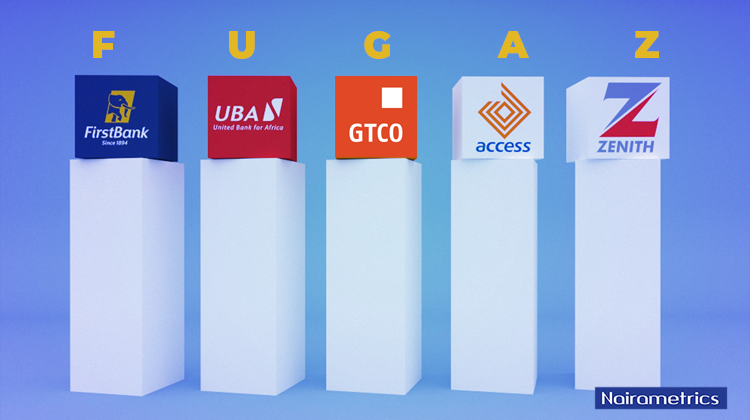
In June 2026, the Central Bank of Nigeria (CBN) released its Exposure Draft on Financial Holding Company (FHC) licensing and regulation. This rulebook will govern how groups like Access Holdings, FBN Holdings, GTCo, and Stanbic IBTC Holdings structure their banking and non-banking subsidiaries going forward.
The proposed guidelines signal a deliberate redesign of corporate parenting, pushing Nigerian financial holding companies away from a “strategic architect” model towards a “financial controller” approach. This shift aims to enhance systemic stability by insulating domestic banking subsidiaries from risks generated in other jurisdictions.
Redefining Group Control and Risk Management
Under the draft, Nigerian banks would no longer directly own foreign banking subsidiaries. Instead, these subsidiaries would be placed under the holding company itself or an intermediate holding structure. This creates an additional layer of separation, effectively ring-fencing domestic operations from potential difficulties abroad.
The CBN's concern stems from differing capital requirements, supervisory practices, resolution regimes, and foreign-exchange rules across countries. Direct ownership by a Nigerian bank could expose domestic depositors to risks beyond the immediate reach of local regulators.
Similar logic applies to shared services. While general administrative services may remain centralised, governance-sensitive functions like risk management, compliance, internal audit, and company secretarial functions are expected to operate independently within subsidiaries. This ensures that those monitoring risk are not subject to excessive influence from the corporate centre.
These changes carry cost implications, as restructuring may require new entities and reorganisation through spin-offs or hive-ups. Decentralising compliance and risk functions also demands skilled professionals, which are neither abundant nor inexpensive. However, the regulator views the transaction cost of stronger governance as yielding sounder and safer outcomes.
The philosophy extends to proposed restrictions on board overlap and group participation in governance processes. Limits on cross-directorships and cross-attendance reduce opportunities for informal control by the parent company, expecting subsidiaries to exercise greater independence under common ownership. Intra-group lending rules are also reinforced, largely preserving the 2014 framework's principle that loans from banking subsidiaries to related entities attract severe prudential consequences unless adequately secured.
The Undefined "Bank" and its Disruptive Potential
Despite the comprehensive nature of the draft, a critical omission lies in its failure to define the word “bank.” Section 19(8) of the Banks and Other Financial Institutions Act (BOFIA) 2020 caps the equity a bank can hold in a foreign subsidiary at 10% of its shareholders’ funds. This rule, designed to prevent overexposure of Nigerian depositors' money to foreign risks, was written for a time when a Nigerian bank was simply a bank, not part of a larger holding company structure.
The statute does not clarify whether the 10% cap applies only to the licensed bank itself or to everything the holding company owns above it. If the CBN interprets Section 19(8) to include equity held at the holding company level, several Nigerian banking groups could find themselves in breach of a rule they had no reason to believe applied to them.
This ambiguity is not a mere technicality. It could force disposals of foreign stakes, likely at distressed prices, in often thin and illiquid markets. Multiple Nigerian groups selling similar assets simultaneously would depress prices, deepen losses, and dent the confidence of international investors. This would also collide with the CBN’s ongoing bank recapitalisation programme, creating competing capital demands.
Experts suggest that good regulation, as seen in the Basel III framework, the Bank of England’s PRA, and South Africa’s Reserve Bank, applies capital rules on a consolidated basis while preserving solo-entity requirements. Nigeria could adopt a similar two-tier logic, introducing a separate, group-level foreign equity ratio measured against the FHC’s consolidated capital to ensure full visibility into aggregate cross-border exposure without supervisory conflict.
Furthermore, a realistic runway for adjustment is crucial. Groups that built foreign positions between 2020 and 2024, before any implementing regulation existed, deserve a phased compliance window of at least 36 months with milestone certifications. This would allow institutions to rebalance in an orderly way, preventing a race to the exit that historically produces better-lawyered banks rather than better-capitalised ones.
Regulatory clarity is not a cost but an enabler, allowing Nigerian banking groups to build the cross-border scale necessary for a serious financial centre, free from the uncertainty of ambiguous rules.