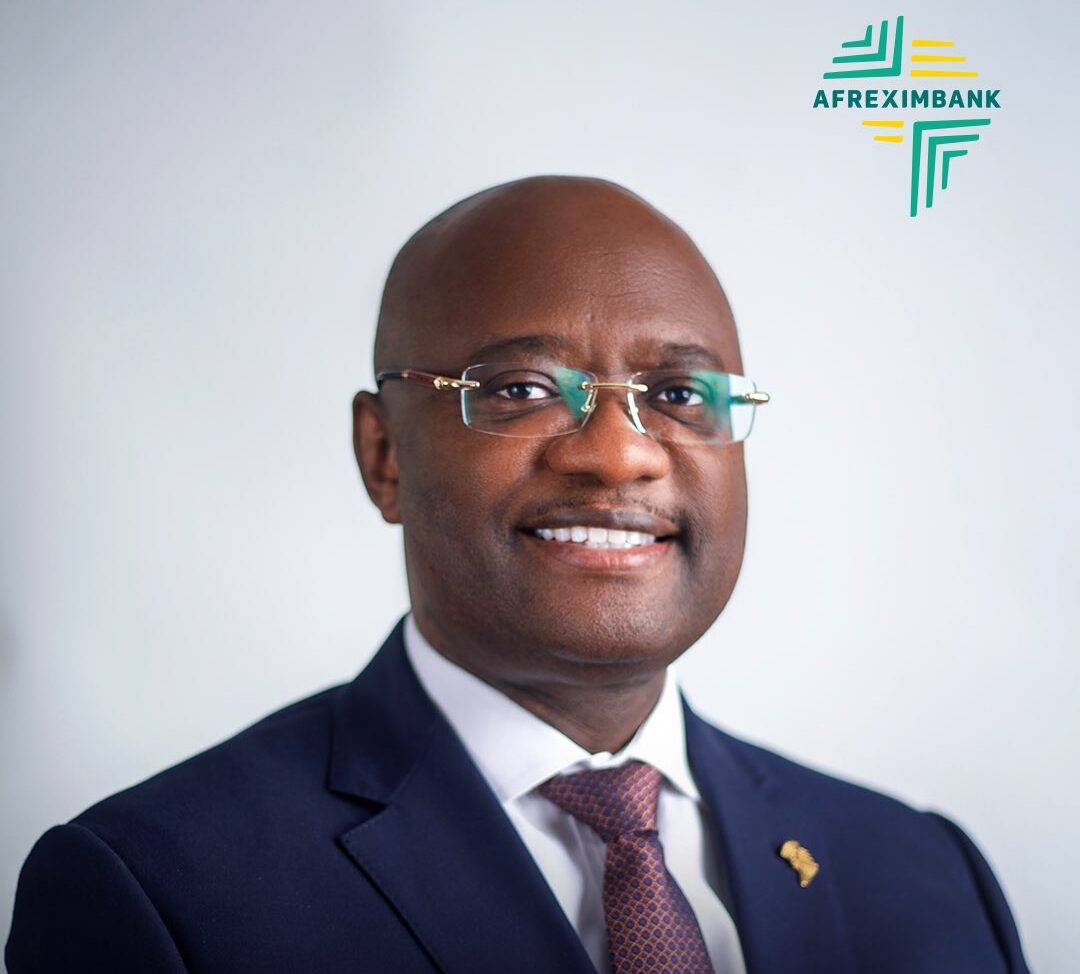
The African Export-Import Bank (Afreximbank) has secured an investment-grade BBB+ long-term and A-2 short-term issuer credit rating from S&P Global Ratings. This upgrade reinforces investor confidence in the pan-African lender, according to Dr. George Elombi, President and Chairman of the Board of Directors of Afreximbank.
Speaking in Abuja, Dr. Elombi emphasized that fair and evidence-based credit ratings are crucial for Africa’s industrialization agenda. He stated that the continent's economic sovereignty depends on its ability to industrialize, process its resources, and build robust financial institutions capable of mobilizing capital for long-term development.
Dr. Elombi also defended Afreximbank's decision to terminate its relationship with Fitch Ratings. He explained that the disagreement stemmed from fundamental differences in how Fitch evaluated the bank’s liquidity, funding diversification, and risk profile.
This is not the first time Afreximbank has ended a relationship with a rating agency; it similarly parted ways with Standard & Poor’s (S&P) in 2014. At that time, S&P had initially assigned a low rating, viewing trade finance as having limited developmental impact and considering the bank too small to influence Africa’s economic growth.
Dr. Elombi noted that after years of engagement, S&P eventually revised its position as Afreximbank expanded its role in financing trade and supporting economic development across the continent. He argued that Fitch similarly failed to appreciate Afreximbank’s strategy of diversifying its funding sources beyond traditional Western capital markets.
The bank has increasingly sourced capital from Africa, Asia, and the Middle East to align with changing global trade patterns. Dr. Elombi disclosed that approximately 38% of the bank’s funding now originates from Africa, another 38% from Asia, around 12% from the Middle East, while dependence on Western funding sources has decreased to approximately 12%.
Despite this diversification, Fitch reportedly viewed the reduced reliance on European capital markets as a weakness. Dr. Elombi challenged Fitch’s liquidity assessment, stating that the bank deliberately maintained excess liquidity after anticipating disruptions in global markets, raising additional funding ahead of potential shocks.
He criticized the methodology of international rating agencies, noting that they often publish ratings without adequately explaining how conclusions are reached. Dr. Elombi also argued that these agencies continue to apply excessive risk discounts to African institutions simply because they operate on the continent, despite strong collateral coverage, with about 80% of Afreximbank’s loan portfolio backed by collateral.
Afreximbank’s strong financial position contributed to its S&P rating, with total assets and contingencies rising to $49.4 billion in Q1 2026. During the same period, the bank recorded shareholders’ funds of $8.6 billion, maintained a capital adequacy ratio of 23%, and posted a non-performing loan ratio of 2.4%.
The bank reported a Q1 2026 profit of $268.9 million, an increase from $215.4 million in Q1 2025. Net interest income grew by 24% to $510.0 million, up from $411.2 million in the first quarter of 2025. Average loans and advances for Q1 2026 stood at $32 billion, an 8% increase compared to the same period in the previous year.
Despite global economic uncertainty, Afreximbank has continued to attract strong investor interest, successfully executing Samurai and Panda bond issuances and securing a $2 billion equivalent dual-tranche syndicated facility in Q1 2026 from 31 lenders across Europe, Asia, the Middle East, and Africa.