Lagos Power Improvement Initiative
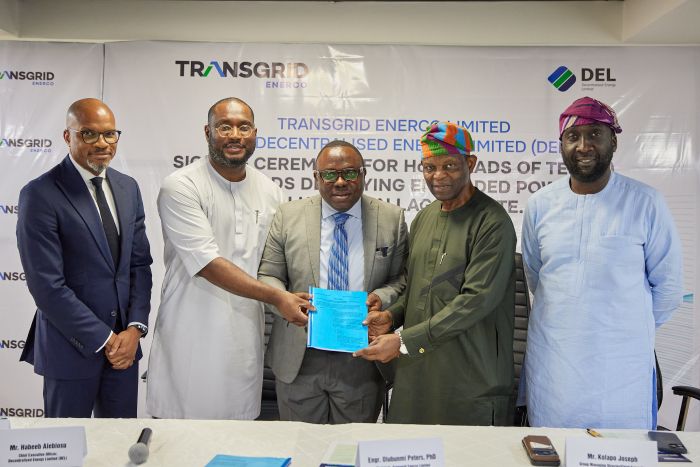
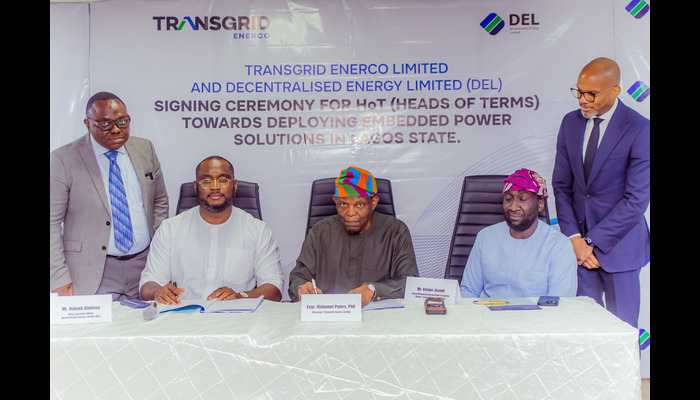
Transgrid Enerco Limited and Decentralised Energy Limited (DEL) have entered a strategic collaboration to jointly develop and deploy integrated energy solutions across Lagos State. This initiative, supported by InfraCredit's credit enhancement facility, aims to expand generation capacity, reduce service downtime, and improve the reliability of electricity supply in critical areas of the state.
The partnership will focus on increasing embedded generation capacity and significantly decreasing service interruptions through a coordinated strategy that combines grid supply with embedded generation and supporting infrastructure. Both companies will leverage their combined assets and resources to deploy embedded solutions in identified zones within Lagos.
A project Special Purpose Vehicle (SPV) will be established by Transgrid and DEL to manage project development, delivery, and long-term operations, ensuring focused execution and scalable implementation. InfraCredit is providing crucial support through its credit enhancement solutions, enabling access to long-term local currency financing for the power value chain.
The project will initially target the Marina and Lekki Phase 1 areas, with plans to extend to Ikoyi and Victoria Island, and potentially other locations in the future. Transgrid and DEL have signed a Heads of Terms agreement to formalize this project.
Petrol Sales Collapse Amidst Price Surge
Oil marketers report a drastic drop in petrol sales, with filling stations now selling around 1,000 litres daily, down from a previous average of 10,000 litres. Some stations are reportedly selling as little as 300 litres per day.
This decline is attributed to a sharp rise in pump prices, which has significantly altered consumer behaviour. Motorists are reportedly cutting down on fuel consumption, with many purchasing only four or five litres at a time. The price of petrol has surged from an average of N839 per litre to over N1,350 per litre, while diesel prices have risen from N1,340 to above N1,750 per litre in recent weeks.
Industry operators note that the increased prices have weakened purchasing power, reduced sales volumes, and forced both consumers and operators to adapt to a new market reality. Motorists are also reportedly switching to cheaper transport alternatives and reducing their overall fuel usage.
Nigeria's Oil and Gas Reserves Update
Nigeria's total oil and condensate reserves reached 37.01 billion barrels as of January 1, 2026, according to the Nigerian Upstream Petroleum Regulatory Commission (NUPRC). Gas reserves were reported at 215.19 trillion cubic feet (TCF) as of the same date.
The NUPRC's Chief Executive, Oritsemeyiwa Eyesan, stated that crude oil reserves were estimated at 31.09 billion barrels, with condensate reserves at 5.92 billion barrels. Associated gas reserves were recorded at 100.21 TCF, and non-associated gas reserves at 114.98 TCF.
The reserves life index is estimated at 59 years for oil and 85 years for gas, based on current production levels. Oil and condensate reserves experienced a marginal decline of 0.74% compared to the previous year, attributed to 2025 production and field performance updates. Conversely, gas reserves saw an increase of 2.21%, driven by new discoveries and improved reservoir studies.