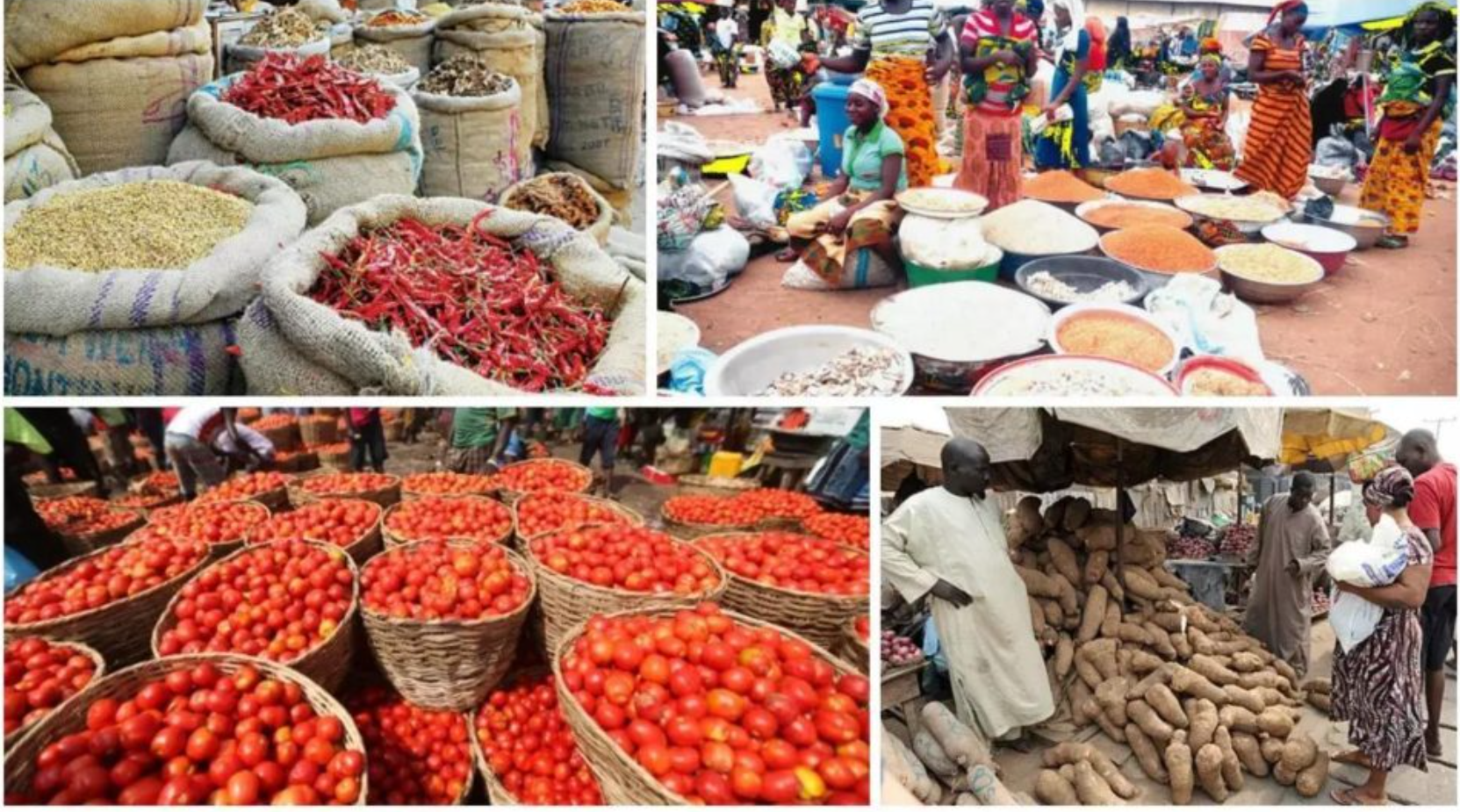
Food prices across major Lagos markets surged in March 2026 as rising petrol costs drove up transportation and logistics expenses, triggering widespread increases in staple commodities. A Nairametrics Research physical market survey tracking 68 food items across Mushin, Daleko, Mile 12, and Oyingbo markets revealed a sharp reversal from February’s modest easing, with inflationary pressures re-emerging across both perishable and non-perishable food categories.
Fuel prices began to rise in late February, with pump prices increasing from N875 to N960 per litre, while Dangote Refinery raised its price from N774 to N874 per litre, driven by a spike in global oil prices linked to the Middle East war. The surge in oil prices increased logistics and transportation costs, which in turn drove up food prices in March.
The survey indicates that 43 items recorded price increases in March, up significantly from 23 items in the February food survey. Meanwhile, only 13 items declined in price, compared to 35 in the previous month, while 12 items remained unchanged, highlighting limited areas of price stability. As of February 2026, headline inflation remained elevated at 15.06%, with food inflation continuing to be the primary driver of overall price pressures at 12.12% in February, an increase from 8.89% in January 2026. The March surge in market prices suggests that inflationary risks persist.
The most significant price increases were recorded in staple foods such as pepper, beans, tomatoes, and fish, with some items rising by over 100% within a month. Pepper prices surged significantly across both medium and big bag categories. A medium bag rose from N32,000 in February to N80,000 in March, while a big bag jumped from N58,000 to N140,000, reflecting increases of 141.38% and 150% respectively. Traders attributed this spike to a combination of seasonal scarcity and a sharp rise in transport costs.
Tomatoes increased sharply, with big baskets rising from N40,000 to N60,000 (50%) and oval varieties from N25,000 to N35,000 (40%). Market participants noted that supply inflows from northern farming belts declined during the period, compounding the effect of rising haulage costs. Beans recorded one of the most significant increases across staple grains. Brown beans (50kg) climbed from N50,000 to N85,500, recording over a 70% rise, while Oloyin beans rose from N45,000 to N75,000 (66.67%).
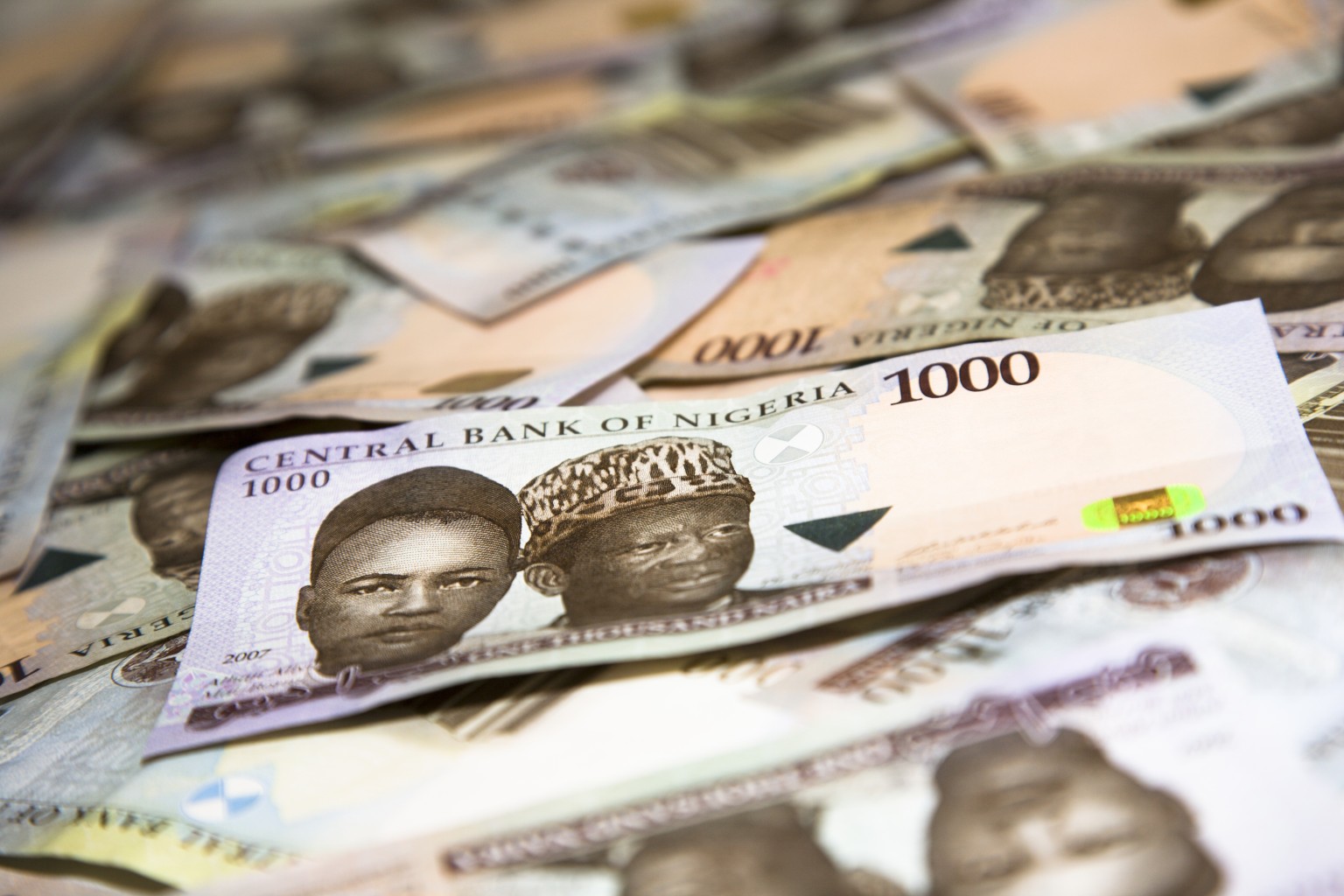
The Nigerian currency is navigating a complex landscape marked by high geopolitical uncertainty in the Middle East and a phase of technical consolidation. The official exchange rate remains around N1,383/$, indicating relative stability compared to extreme fluctuations seen in previous years. Psychologically, the Nigerian currency has struggled to break and sustain below N1300/$ in March amid the resurging value and interest in the greenback. A sustained move above N1,400/$ in the official market could signal a return to N1,450/$.
Since early March, the Naira has traded within a range of N1,352/$ to N1,398/$. This sideways movement suggests that the market is ‘pricing in’ current interest rates and waiting for the next major catalyst, such as the upcoming MPC meeting. The ‘Bollinger Bands’ on the USD/NGN daily chart are narrowing, indicating an impending significant breakout. There is a bullish bias toward a downward breakout (N1350/$) given the fundamental trend of decelerating inflation, meaning Naira strengthening, unless oil prices plunge.
The CBN’s foreign exchange reserves, the Nigerian reference crude oil price being below $65 per barrel, and recent efforts to enhance domestic production provided the apex bank more ‘firepower’ to defend the naira against high volatility. The Nigerian banking sector is undergoing consolidation to establish ‘sturdier’ institutions that are less vulnerable to speculative forex trading, driven by increasing minimum capital requirements for Nigerian banks, which are vital to the forex market. Additionally, leveraging advancements in ICT and services sectors, the IMF recently revised Nigeria’s 2026 GDP growth estimate to 4.4%. This macroeconomic optimism effectively sets out a ‘floor’ for the Naira’s value.
The US dollar approached a 10-month high and was on track for its biggest monthly gain since July last year, amid conflicting signals from the US and Iran that diminished hopes for a quick resolution to the Middle East conflict. President Donald Trump stated that Iran’s new leaders have been ‘very reasonable,’ even as more US troops entered the region and Tehran issued a warning that it would not tolerate humiliation. The euro found some support amid expectations of rate hikes by the European Central Bank. Meanwhile, the yen stayed close to the critical 160 per dollar level after reaching its lowest since Tokyo last intervened to support the currency in July 2024. This month, the Iranian conflict effectively shut the Strait of Hormuz, a key chokepoint for roughly one-fifth of the world’s oil and gas flows.
Markets reacted sharply, pushing Brent crude toward a record monthly increase. Since early March, the dollar has benefited from its safe-haven status, with higher oil prices negatively impacting Japan and the euro zone but shielding the US. The Japanese yen strengthened by 0.40 percent to 159.65 per dollar after reaching its lowest since July 2024 at 160.47 during the Asian session. This reversal occurred as Japan threatened yen intervention and hinted that additional currency declines might support a short-term rise in interest rates. Currency traders will be compelled to increase their bets in line with the Federal Reserve’s (Fed) strict monetary policies this year if oil prices continue to rise. As US gas prices have increased due to rising oil prices, Fed hawkish prospects have already improved.
In a special episode of Drinks & Mics, industry leaders discussed global issues shaping Nigeria’s economic reality. Rolake Akinkugbe-Filani noted that diesel prices increased from N774 to roughly N1,300 in a short time. The nearly 100% increase forced many businesses to rethink their operations, adjust budgets, pricing strategies, and logistics. Omon Anenih stated that fuel price volatility is felt immediately by businesses, and diesel prices often remain high even when global oil prices fall. Chinwe Egwim observed that rising global oil prices do not automatically translate into higher revenue for Nigeria, as the country still imports a large share of refined petroleum products, reducing gains from crude oil exports. Laura Fisayo-Kola-Olarewaju expressed doubts that Nigeria would fully benefit from a global oil boom, citing current production levels of about 1.3 million barrels per day, well below the government’s benchmark of 1.8 million barrels.
Nigeria’s foreign reserves declined by about $547 million within a 15-day period in March 2026, reflecting renewed pressure on the country’s external buffers. The Central Bank of Nigeria (CBN) has yet to explain the reason for the drop, but historical trends indicate a steady drawdown rather than a sharp fall. The movement also suggests a decline related to payment obligations within the foreign exchange market. The decline marks a shift from the earlier positive trend recorded at the start of the year. Reserves declined from $50.03 billion on March 11, 2026, to $49.48 billion on March 26, 2026, representing a total drop of $547 million. The daily figures show a steady drawdown: March 11, 2026: $50.03 billion; March 12, 2026: $50.01 billion; March 13, 2026: $49.97 billion; March 16, 2026: $49.87 billion; March 17, 2026: $49.83 billion; March 18, 2026: $49.79 billion; March 23, 2026: $49.61 billion; March 24, 2026: $49.57 billion; March 25, 2026: $49.53 billion; March 26, 2026: $49.48 billion. This demonstrates a steady drawdown in Nigeria’s reserves, with levels dipping below the $50 billion mark during the period.
Foreign outflows on the Nigerian Exchange (NGX) rose 9.12% to N72.32 billion in February 2026 despite an improvement in inflows, signalling continued cautious sentiment among offshore investors. Foreign inflows climbed by 39.39% to N66.71 billion in February, from N47.86 billion in January. Foreign outflows rose by 9.12% to N72.32 billion, up from N66.28 billion in the prior month. This resulted in a net foreign outflow of N5.61 billion in February, compared to N18.42 billion recorded in January. Total foreign transactions increased by 21.81% to N139.03 billion, from N114.14 billion in January. Although the narrowing net outflow suggests some level of stabilisation, foreign investors still withdrew more funds than they injected, indicating continued profit-taking and cautious positioning.
Total transactions surged by 78.93% month-on-month to N1.542 trillion in February, largely driven by domestic investors. Foreign participation declined in share terms to 9.01% of total transactions, down from 13.24% in January. Domestic investors accounted for 90.99% of total market activity, reinforcing their dominance. Institutional investors led domestic participation with N854.83 billion, significantly ahead of retail investors at N548.50 billion. Overall, while foreign investor participation is showing early signs of recovery, the continued dominance of outflows highlights the need for improved economic fundamentals to attract and retain long-term capital.
The Centre for the Promotion of Private Enterprise (CPPE) has raised concerns over persistent structural weaknesses in Nigeria’s credit system, warning that despite a successful bank recapitalisation exercise, lending remains skewed and largely disconnected from productive sectors. The think tank stressed that stronger bank balance sheets must now translate into meaningful support for the real economy. CPPE commended the Central Bank of Nigeria (CBN) for executing a smooth and orderly recapitalisation programme. While the recapitalisation has strengthened the banking sector’s resilience, CPPE warned that Nigeria’s financial intermediation remains weak, with private sector credit at just 17% of GDP in 2025—well below the sub-Saharan African average of 25% and the 34% benchmark for lower-middle-income countries.
Credit with maturity of less than one year accounts for about 55% of total credit, while long-term credit (above three years) accounts for only about 25%. This structure is not aligned with the financing needs of critical sectors such as manufacturing, agriculture, infrastructure and real estate. Consumer credit accounts for only 7 percent of total lending, below the 15–25% regional range. The CPPE highlighted that this imbalance constrains financing for capital-intensive sectors such as manufacturing, agriculture, infrastructure, and real estate, undermining economic diversification and industrialisation goals.
The CPPE identifies structural barriers that continue to limit the impact of banking sector strength on the real economy: high government borrowing crowding out private sector credit, tight monetary policy and elevated interest rates, stringent collateral requirements and high perceived risks, especially for SMEs, and incentive structures favoring short-term, low-risk investments over long-term productive lending. CPPE emphasized that policy focus must now shift from recapitalisation to improving financial intermediation and ensuring credit flows effectively into productive sectors.
Foreign capital inflows into Nigeria’s banking sector rose to $13.53 billion in 2025, a 93.25% year-on-year increase from $7.00 billion recorded in 2024. This surge occurred as banks intensified capital raising ahead of the Central Bank of Nigeria’s recapitalisation deadline. In Q1 2025, banking inflows stood at $3.13 billion, up from $2.07 billion in Q1 2024. The pace accelerated in Q2, where inflows climbed to $3.41 billion, compared to $1.12 billion a year earlier. In Q3 2025, inflows reached $3.14 billion, significantly higher than $579.48 million recorded in Q3 2024, while Q4 2025 saw inflows rise to $3.85 billion, up from $3.23 billion in the corresponding period of 2024. The pattern suggests that capital raising was not concentrated in a single window but sustained throughout the year, aligning with banks’ phased recapitalisation strategies.
The sector maintained a commanding share of total capital importation across all quarters in 2025. It accounted for 55.44% of total inflows in Q1, surged to 66.56% in Q2, moderated to 52.25% in Q3, and rebounded to 59.75% in Q4. This compares with 2024, where banking’s share ranged from 43.15% in Q2 to 63.46% in Q4, indicating that 2025 saw a more consistent concentration of inflows into the sector. Nigeria’s total capital importation increased to $23.22 billion in 2025, up from $12.32 billion in 2024, reflecting an 88.45% year-on-year growth. Quarterly inflows in 2025 were also stronger across the board, rising from $5.64 billion in Q1 to $6.44 billion in Q4, signalling improving investor confidence and stronger liquidity conditions. The banking sector alone contributed over $6.53 billion to the total increase of $10.90 billion, reinforcing its central role in driving the overall growth.