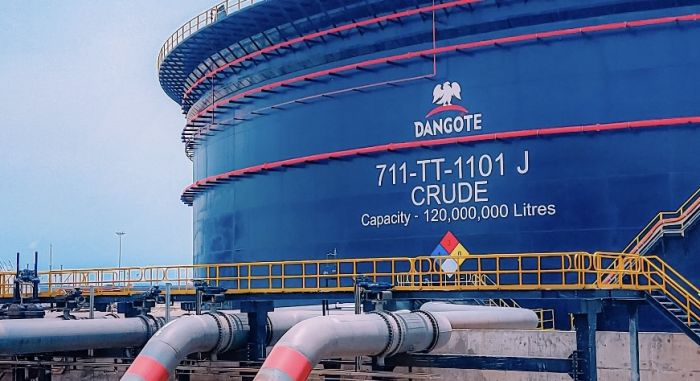
Members of the Jetties and Petroleum Tank Farm Owners of Nigeria (JETFON) have publicly distanced themselves from the Depot and Petroleum Products Marketers Association of Nigeria (DAPPMAN) regarding fuel importation. JETFON is throwing its support behind the Dangote Petroleum Refinery's efforts to cease fresh petrol imports.
The association urged the Federal Government and the Nigerian Midstream and Downstream Petroleum Regulatory Authority (NMDPRA) to cancel existing import licenses for Premium Motor Spirit (PMS), asserting that current local refining capacity is adequate to meet domestic demand.
In a statement released by its Executive Secretary, Mr. Olayiwola Temitope, JETFON emphasized that continued fuel importation is no longer economically viable given the growing refining capacity within Nigeria. The association argued that the Dangote refinery and other local facilities have significantly reduced the nation's reliance on imported fuel and deserve protection.
JETFON warned that approving new import permits would weaken local investments and hinder progress towards energy independence. "Relying on foreign refined products leaves the local economy vulnerable to external supply chain shocks, international logistics disruptions, and continuous foreign exchange pressures that weaken the naira," the statement read. "By prioritizing local refineries, Nigeria can build a self-sustaining and secure domestic fuel supply ecosystem."
The tank farm owners believe Nigeria's long-term economic stability hinges on strengthening domestic refining rather than encouraging import dependency. They pointed to recent NMDPRA data from April 2026, which indicated a rise in daily petrol consumption to 51.1 million litres from 47.3 million litres in March.
Concurrently, daily fuel imports reportedly decreased by 37.3 percent, falling from 5.9 million litres in March to 3.7 million litres in April. JETFON noted that local refineries, primarily the Dangote refinery, supplied approximately 40.7 million litres daily during this period, substantially replacing imported products.
According to JETFON, these figures demonstrate that domestic refining is gaining market share and alleviating pressure on foreign exchange demand. Supporting local refining, they added, would help stabilize the naira, conserve external reserves, and generate employment across the petroleum value chain.
"With the Federal Government backing local refineries, Nigeria stands to drastically reduce its heavy reliance on foreign exchange for fuel imports, thereby easing the persistent pressure on the naira and conserving vital external reserves," the association stated. "Beyond forex stability, a thriving local refining sector serves as a massive catalyst for economic growth, generating direct and indirect employment for thousands of skilled Nigerian youths."
JETFON implored the Federal Government and the NMDPRA to halt the issuance of new import licenses and to review existing approvals to safeguard local investments and industrial expansion. This stance from the tank farm owners is expected to exacerbate divisions within the downstream sector, as stakeholders remain divided on the future of fuel importation in Nigeria.
Officials from DAPPMAN declined to comment on the matter, stating that the association would convene before issuing further statements.