Nigeria's crude oil production saw a modest increase in March 2026, reaching 1.38 million barrels per day, according to the Organisation of Petroleum Exporting Countries (OPEC). This figure represents a 5.25% rise from the 1.31 mbpd recorded in February.
Despite this improvement, Nigeria's output remains below its assigned production quota of 1.5 mbpd, falling short by approximately 117,000 bpd. This marks the eighth consecutive month since July 2025 that the country has failed to meet its OPEC allocation.
OPEC's Monthly Oil Market Report, released in April 2026, detailed these figures. Data from secondary sources, which include energy intelligence platforms and independent estimates, placed Nigeria's output slightly higher at 1.46 mbpd in March, up from 1.44 mbpd in February.
The Nigerian Upstream Petroleum Regulatory Commission had previously indicated that production weakened towards the end of 2025, declining from 1.436 mbpd in November to 1.422 mbpd in December, before a slight recovery in January 2026. In 2025, Nigeria missed its OPEC quota in nine months.
The country began 2025 strongly, producing 1.54 mbpd in January, exceeding its quota. However, production slipped to 1.47 mbpd in February and further to 1.40 mbpd in March 2025. While output recovered to 1.49 mbpd in April and 1.45 mbpd in May 2025, it remained below the OPEC ceiling until June, when it reached 1.51 mbpd.
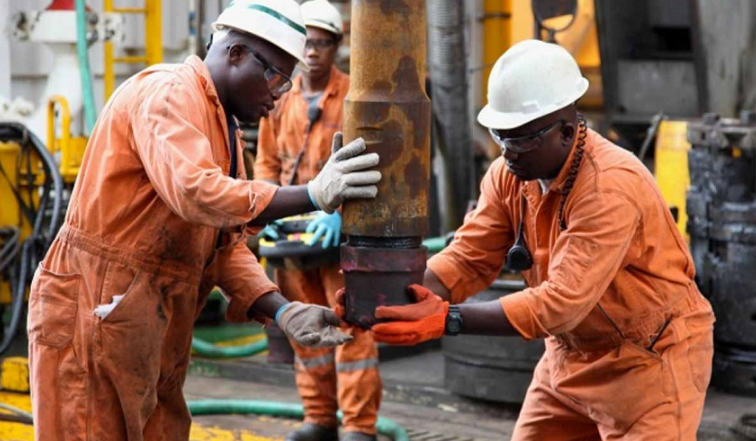
The Chief Executive Officer of the Nigerian Upstream Petroleum Regulatory Commission stated that oil production, including crude and condensate, reached 1.8 mbpd in March 2026. An official from the commission noted that this recovery began in mid-March as assets on turnaround maintenance resumed operations, expressing optimism for meeting the OPEC quota in April.
Nigeria's inability to consistently meet its OPEC production quota impacts its oil export earnings and affects domestic refineries that require feedstock. The Nigerian National Petroleum Company Limited has reportedly begun sourcing crude oil from third-party international traders for the Dangote Refinery to sustain its operations.
Globally, OPEC producers implemented significant production cuts in March. Saudi Arabia reduced output by 2.35 mbpd to 7.76 mbpd, Iraq by 2.23 mbpd to 1.9 mbpd, and the UAE and Kuwait also posted steep declines. Venezuela, Congo, and Libya saw production increases, while Algeria experienced a marginal drop.