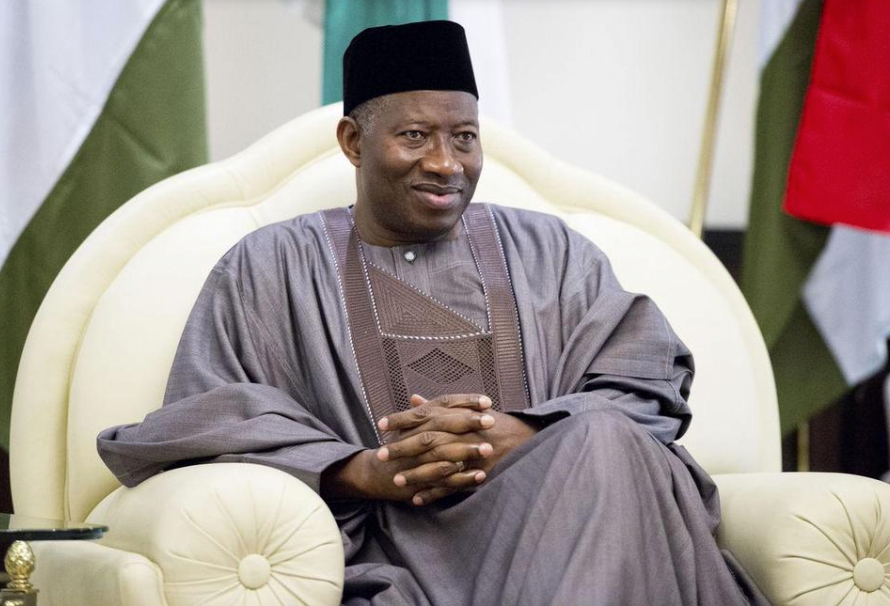
Former President, Dr Goodluck Jonathan, has defended his administration, stating that he did his best while in office. His remarks followed criticism of his tenure by former Vice President Atiku Abubakar during an interview on Arise TV, where Abubakar described Jonathan as inexperienced and prone to making mistakes.
Speaking at the 2025 Association of Retired Career Ambassadors of Nigeria awards ceremony in Abuja, Jonathan addressed the notion that his age contributed to errors in leadership. He questioned whether a leader needed to be over 100 years old to govern effectively, noting he was 53 when he became president in 2010 and left office at 58 in 2015.
“If I made mistakes, yes, nobody who becomes a governor or a president will say you did not make mistakes. Even when you promote yourself to the level of a god, you become a deity. All human beings must make mistakes,” Jonathan stated.
He highlighted Nigeria’s diplomatic achievements during his presidency, specifically mentioning the country's election to the United Nations Security Council on two occasions. “I’m talking to diplomats, so I can say that during my period, I knew what I did for us to appear in the UN Security Council two times… If I were so naive, I don’t think I would have been able to navigate through that process,” he added.
West African Stability and Economic Progress
Jonathan also emphasized the critical link between political stability and economic development in West Africa. He warned that unstable governance systems would continue to impede progress across the region.
He observed that while the founding fathers of ECOWAS had a strong vision, the bloc faces ongoing instability due to political challenges in member states. Jonathan noted that efforts to enforce democratic norms have faced setbacks, and tangible progress is difficult if societies remain politically unstable.
“We cannot progress economically if we are very unstable societies politically,” he stressed, adding that promoting democracy often clashes with national sovereignty, complicating consensus among leaders.
Jonathan urged West African leaders to assume collective responsibility for stabilizing the region. “The heads of states of ECOWAS must continue to work together and agree on concrete terms and make sure that the sub-region is politically stable,” he stated.
He further noted that the region's ambition for economic integration cannot succeed without strong democratic institutions.
Additionally, Jonathan called on Nigerian diplomats to document the country’s foreign policy experiences to guide future administrations in making informed decisions in international relations.
Reflecting on the establishment of ECOWAS in 1975, Jonathan paid tribute to its founders, including former Head of State Yakubu Gowon, praising their foresight. He described the vision of a united and economically integrated West Africa as “bold, ambitious, and necessary.”
Gowon, also honored at the ceremony, recalled the formation of ECOWAS as a result of post-war diplomatic engagements and regional cooperation, emphasizing it was a collective effort involving government institutions and civil servants.