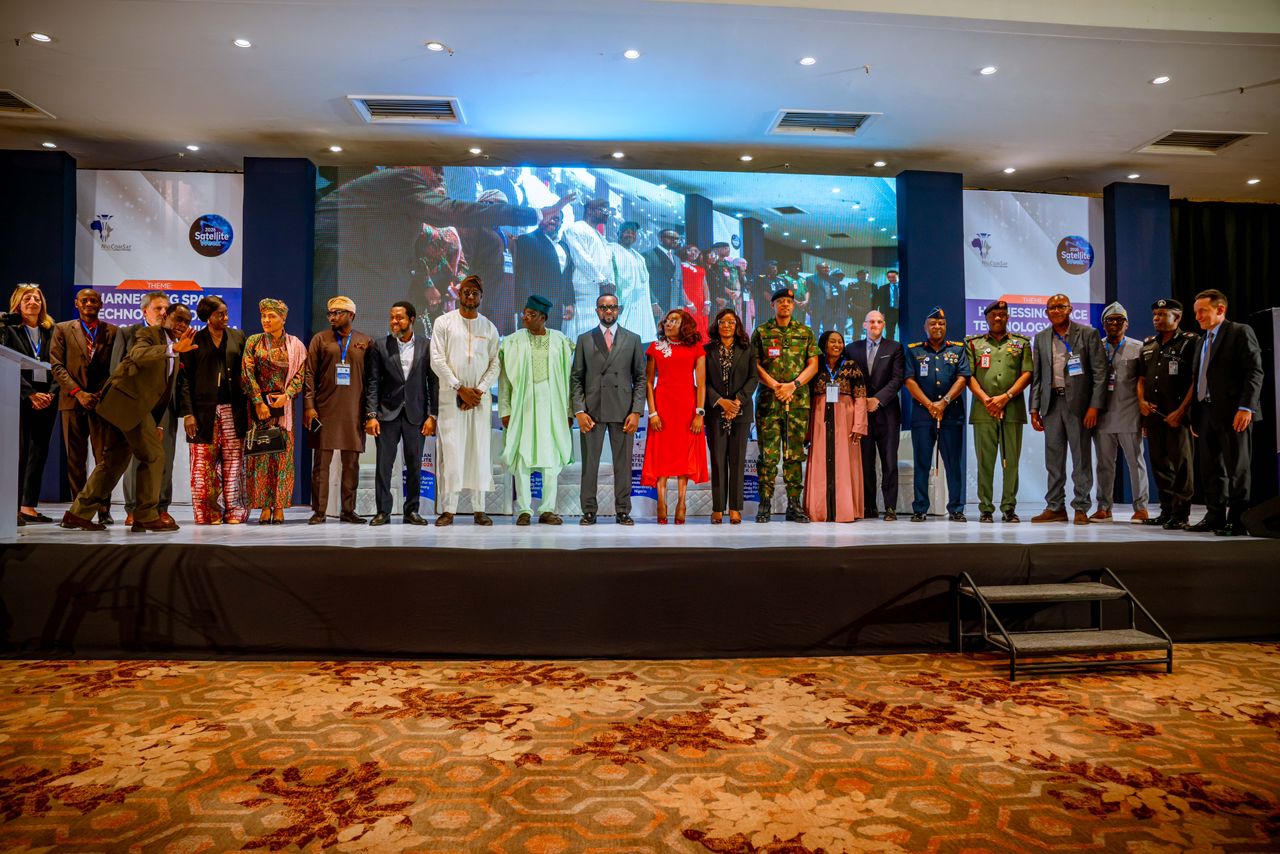
President Bola Tinubu has approved two additional communication satellites, NIGCOMSAT 2A and 2B, for Nigeria’s space programme, according to Jane Nkechi Egerton-Idehen, the Managing Director of Nigerian Communications Satellite Limited (NIGCOMSAT). The announcement was made on Monday during the opening of the 2026 Nigerian Satellite Week in Abuja, themed “Harnessing Space Technology for an Extraordinary Nigeria.”
“This approval by President Bola Ahmed Tinubu is a clear demonstration of Nigeria’s recognition of space as a driver of national development and sovereignty,” Egerton-Idehen stated. She highlighted NIGCOMSAT's evolution from a single-satellite operator to a multi-service provider offering broadband, broadcasting, and connectivity services across Nigeria and parts of Africa.
Egerton-Idehen reflected on Nigeria's 20-year journey in the space economy, emphasizing the commitment to building capacity, institutions, and credibility. NIGCOMSAT has recently strengthened its global and regional presence, securing a Low Earth Orbit connectivity partnership with Eutelsat and initiating cooperation with the Kenya Space Agency. The agency now holds the Vice Chairmanship of the Global Satellite Operators Association, providing Nigeria influence in international satellite policy and spectrum governance.
Empowering Innovators and Expanding Connectivity
To nurture future space-focused companies, NIGCOMSAT launched the NIGCOMSAT Accelerator Programme this year, which will become a permanent feature to support startups in satellite applications and digital connectivity. Complementing this is Project 774, designed to extend satellite-enabled connectivity to all local government areas across Nigeria, aiming to support healthcare, education, and economic activity in underserved communities.
Kennedy Osemwegie, representing the Chief of Army Staff, noted the critical role of satellites in intelligence gathering, surveillance, communications, and disaster response. He added that collaboration between the military, government agencies, and private sector actors has enhanced Nigeria’s satellite-enabled operational capacity, vital for addressing terrorism, insurgency, and cross-border crimes.
Aminu Maida, the Executive Vice Chairman of the Nigerian Communications Commission (NCC), stressed the importance of satellites in expanding Nigeria’s digital infrastructure. He stated that satellite technology is central to improving connectivity, service quality, and access across sectors like education, healthcare, and emergency response. Maida called for collaboration between the government, private sector, and innovators to develop practical solutions for Nigeria’s space and digital ecosystem.
The Minister of Communications, Innovation and Digital Economy, Bosun Tijjani, reaffirmed the government’s commitment to expanding satellite infrastructure and praised President Tinubu’s approval of the new satellites. Speaking on the theme “The Space Race: The Convergence of Technology, Government, and Opportunities,” Tijjani highlighted the government's dedication to advancing Nigeria's capabilities in space technology.