Nigeria is poised to commence gas delivery to the Federal Capital Territory, Abuja, through the Ajaokuta–Kaduna–Kano (AKK) pipeline by July. This development represents a crucial advancement in the country's gas development initiatives.
The Nigerian Upstream Petroleum Regulatory Commission (NUPRC) recently shared this update through its internal publication, with a spokesperson confirming the project's progress. The $2.8 billion AKK pipeline, initially conceived in 2008, has experienced several delays, with previous targets set for 2023 and the final quarter of 2025.
With the pipeline now over 90% complete, gas delivery to Abuja is anticipated by July, according to an energy lawyer cited by Reuters.
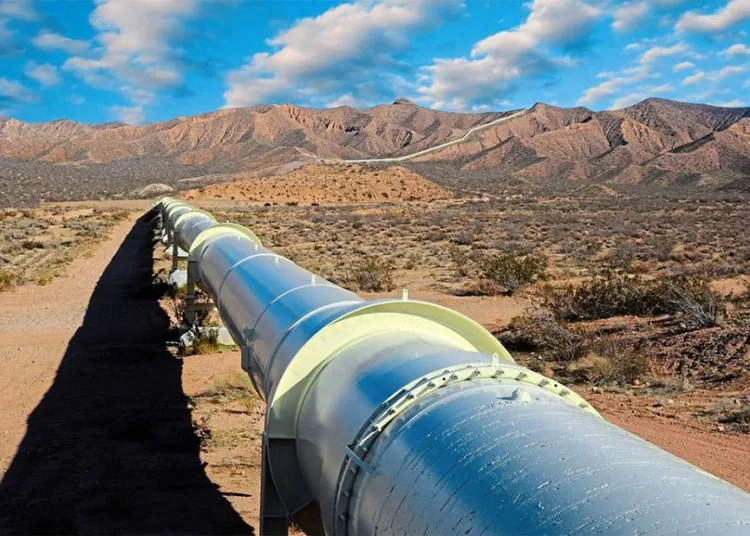
The 614-kilometre pipeline is designed to transport more than 2.2 billion cubic feet of gas daily. It is a vital component of Nigeria’s strategy to transition towards gas utilization, energize industries in the northern region, and reduce reliance on diesel and fuel oil.
The AKK pipeline is a central element of Nigeria's broader gas infrastructure expansion, intended to connect gas-rich southern areas to demand centres in the north. The pipeline traverses Kogi State, Niger State, and Kaduna State before reaching its terminus in Kano, facilitating gas supply to industries and power plants across Northern Nigeria.
Construction commenced in 2020 but was hampered by funding challenges and technical complexities, including the intricate crossing of the River Niger using advanced horizontal directional drilling methods.
The project's financing comprises a mix of debt and equity. The China Export and Credit Insurance Corporation is providing insurance for 85% of the total project cost, amounting to approximately $2.59 billion, sourced from Chinese lenders. The Nigerian Gas Company is contributing the remaining 15% equity, valued at about $434 million.
Gas transported via the pipeline will primarily originate from southern producing regions, connected through the Obiafu-Obrikom-Oben (OB3) gas pipeline, thereby reinforcing national grid supply.
This project is also expected to stimulate industrial growth, enhance electricity generation, and support Nigeria’s transition to a gas-based economy.