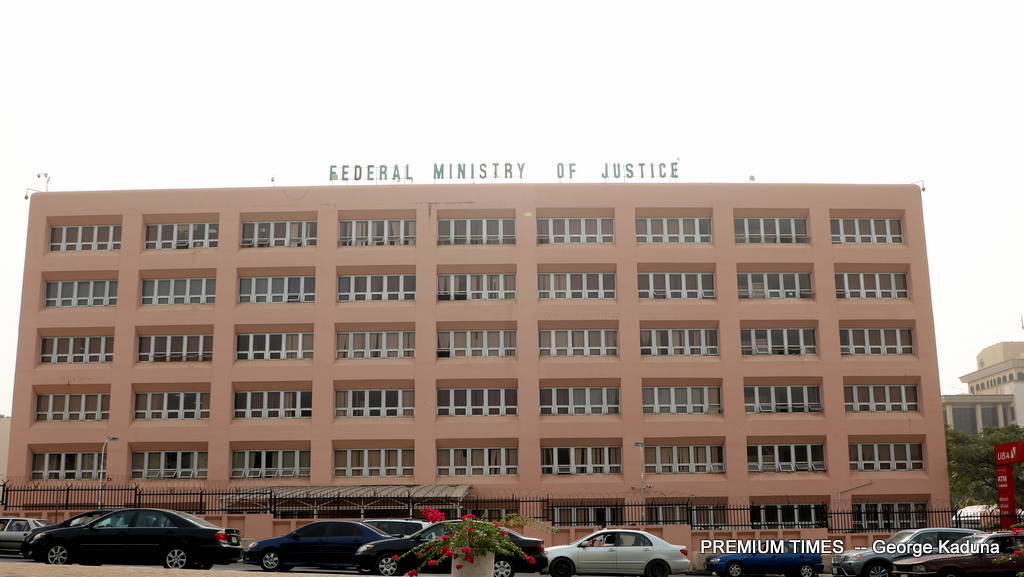
The United States District Court for the District of Columbia has dismissed an attempt by Nigerian businessman Ted Iseghohi Edwards to enforce a $159 million payment agreement against the Federal Republic of Nigeria concerning Paris Club refunds.
Presiding Judge Colleen Kollar-Kotelly ruled on March 12 that the court, like two previous district courts, lacks subject matter jurisdiction over the claims brought by Mr. Edwards and his assignees. The ruling granted the motion to dismiss filed by Nigeria and various Nigerian governmental entities.
The agreement stemmed from a 10 percent legal fee Mr. Edwards was to receive for representing local government councils in a lawsuit against Nigeria to secure the Paris Club refund. After struggling to collect his fees in Nigeria, Mr. Edwards initiated a legal action in the District of Massachusetts in April 2018, but it was dismissed for lack of subject matter jurisdiction and failure to state a claim.
Following negotiations, Nigeria agreed to issue ten promissory notes, each for $15.9 million, totaling $159 million. These notes were issued by Nigeria’s Debt Management Office (DMO) in September 2021, with maturity dates spread annually over a decade, starting October 15, 2022. The notes were backed by the Federal Government of Nigeria and governed by Nigerian law.
Mr. Edwards assigned the notes to Boston Legal Partners, Inc. However, no payment was received on the first promissory note. The DMO stated it was awaiting directives from authorities regarding the payment demand.
In September 2023, the Nigerian government asked a Federal High Court in Abuja to void the promissory notes, arguing they were invalid and inappropriately issued in breach of laws. The government contended that the notes were wrongly charged on federal assets instead of state and local government assets, and that there was no valid consideration for the notes as the consultants were not engaged by the federal government.
Mr. Edwards and Boston Legal Partners filed a suit against Nigeria, the Attorney General and Minister of Justice, and the DMO at the U.S. District Court for the District of Columbia in April 2023. They sought payment of the first promissory note and summary judgment, but the motion was denied as premature before service.
After being served, the defendants moved to dismiss, asserting the court lacked jurisdiction under the Foreign Sovereign Immunities Act (FSIA). The court noted that FSIA grants foreign states presumptive immunity from suit in the United States, and exceptions must be demonstrated.
The judge found that the plaintiffs failed to show that Nigeria's alleged failure to fulfill the first promissory note had a "direct effect" in the United States. The court stated that the mere fact the notes were to be paid in dollars did not necessarily contemplate performance in the U.S., as the dollar is a globally used currency.
Consequently, the court concluded that the commercial activity exception to FSIA did not apply, and thus, it did not have subject matter jurisdiction over the case.