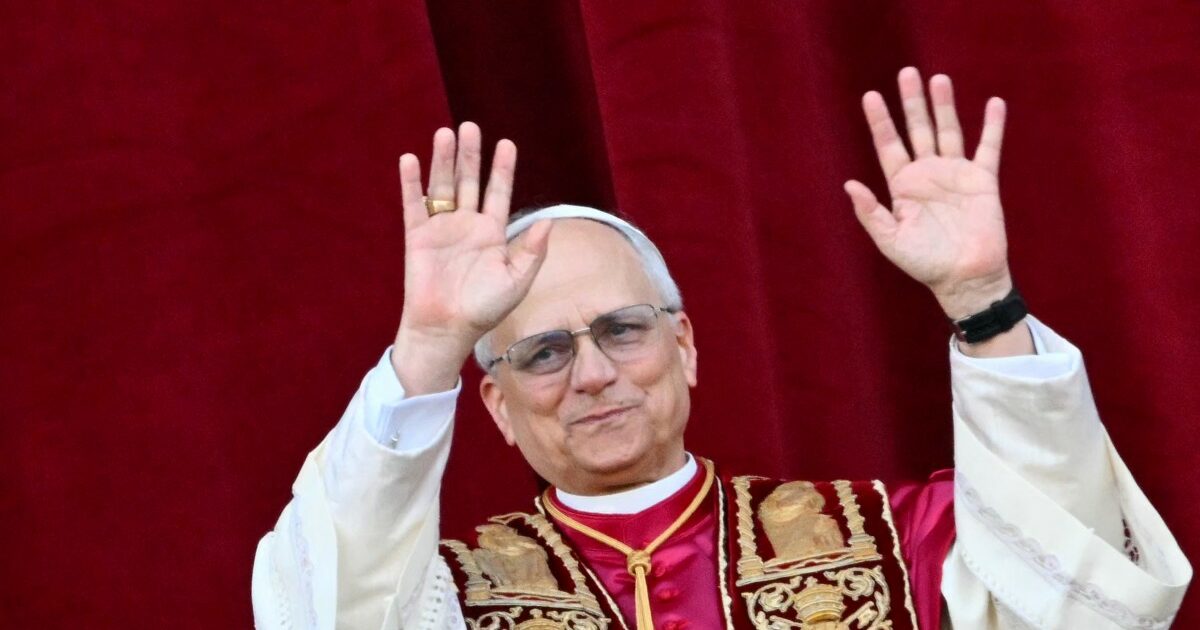
Pope Leo XIV commences an 11-day visit to Algeria, Cameroon, Angola, and Equatorial Guinea on Monday, April 13, 2026. This journey represents his first significant international trip since assuming the papacy last year.
The US-born pontiff, who is 70 years old, will traverse over 18,000 kilometres across the African continent. He is scheduled to deliver 11 speeches, lead seven masses, and visit a dozen locations before concluding his tour on April 23.
His words and actions are expected to carry considerable weight during a period of global uncertainty, exacerbated by the Middle East war and its subsequent energy shock. This African tour follows his previous trips outside Italy to Turkey, Lebanon, and Monaco.
Algeria: Dialogue and Remembrance (April 13-15)
Pope Leo XIV will be the first pontiff to visit Algeria, a nation where Islam is the state religion. He is scheduled to visit the Great Mosque of Algiers and meet with President Abdelmadjid Tebboune.
The pontiff will also connect with members of the Augustinian order in Annaba, the historical home of Saint Augustine. Cardinal Jean-Paul Vesco, the archbishop of Algiers, described the Pope as “a brother who comes to visit his brothers.”
Pope Leo XIV will hold a private prayer at a chapel dedicated to 19 priests and nuns who were murdered during Algeria’s civil war from 1992 to 2002. Ahead of the visit, three international NGOs urged the Pope to raise concerns regarding the treatment of religious minorities with Algerian authorities.
Cameroon: A Call for Peace (April 15-18)
The Pope's visit to Cameroon, a majority-Christian nation in central Africa, is anticipated to focus on peace and reconciliation. This is particularly relevant given the nearly decade-long conflict in the English-speaking northwest region.
The Catholic Church has been involved in mediation efforts in Cameroon. The central event of the visit will be a speech and mass in Bamenda, the epicentre of the violence, to be conducted under heightened security. Approximately 37 percent of Cameroon's 30 million inhabitants are Catholic.
Pope Leo XIV will also tour some of the Church's extensive network of hospitals, schools, and charitable organizations. He is scheduled to meet with President Paul Biya, who at 93, is one of the world's longest-serving heads of state.
Angola: Social Justice and Wealth Distribution (April 18-21)
In Angola, a former Portuguese colony in southern Africa, the Pope's visit is an opportunity to address social issues. Angola, despite its rich oil and mineral resources, grapples with poverty and the lingering effects of a long civil war that concluded in 2002.
Pope Leo XIV is expected to emphasize the importance of equitable wealth distribution from natural resources and the fight against corruption. Angolan Catholics, who constitute about 44 percent of the population, eagerly await his arrival, though some express skepticism about the visit's tangible benefits.
“At the societal level, it represents nothing, because millions of dollars will be taken from the state treasury to prepare, without bringing any benefits to our country,” stated teacher Rosa Kanga, 42. The Pope's itinerary includes the capital, Luanda, and the village of Muxima, a significant historical site on a former slave-trafficking route.
Equatorial Guinea: A Delicate Balancing Act (April 21-23)
The Pope's visit to Equatorial Guinea, governed by President Teodoro Obiang Nguema Mbasogo since 1979, will necessitate a careful approach. Around 80 percent of the country's two million inhabitants are Catholic.
Pope Leo XIV will need to balance support for local Catholics with avoiding endorsement of the authoritarian government. Many anticipate a message on human rights and social justice. In Malabo, the recently downgraded capital, extensive preparations including large photos of the pontiff and continuous national television broadcasts about the trip are underway.