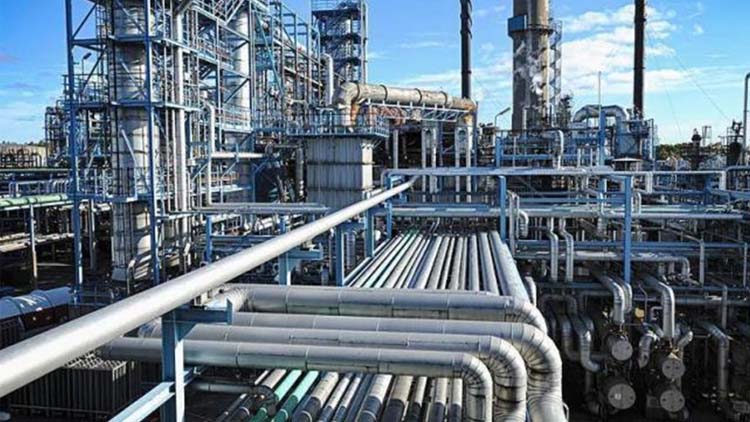
Oando Plc is preparing to raise as much as $750 million to finance a significant drilling campaign. The objective is to boost the company's oil output by up to 300%.
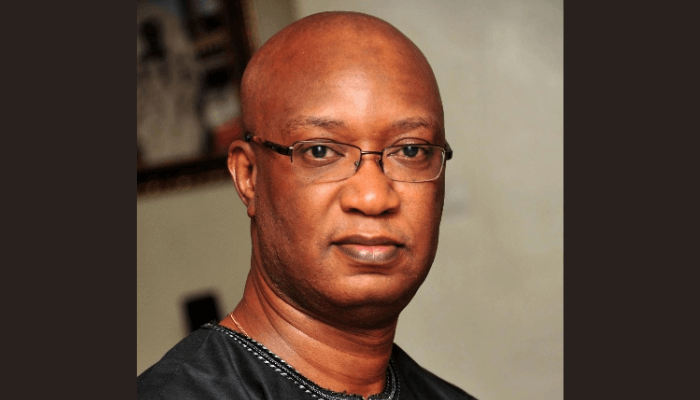
This strategic move was announced by Oando's Chief Executive Officer, Wale Tinubu, in a recent interview with Reuters. In the 2025 fiscal year, Oando recorded an average production of just over 32,000 barrels of oil equivalent per day.
The company intends to drill as many as 100 wells to achieve this substantial ramp-up in production. Tinubu highlighted that the ongoing Iran war has disrupted global energy supply chains, creating new investment opportunities for African producers.
He noted that while investors were previously cautious about Africa due to perceived risks, recent geopolitical events, including the war and Russia's invasion of Ukraine in 2022, have positively shifted sentiment towards the continent.
Tinubu stated, “We are pushing very, very hard towards getting the financing that we need to do an extensive drilling campaign.” He added, “Africa is very, very peaceful compared to these regions.”
Over the past decade, Oando has secured between $3 billion and $4 billion in funding, primarily from European financiers. However, European funding has significantly decreased in recent years as banks reduce their exposure to fossil fuel projects.
This shift has prompted indigenous energy firms like Oando to seek alternative funding sources. These include institutions such as the African Export-Import Bank and the African Finance Corporation. The latter recently supported a $2.5 billion portion of a $4 billion syndicated loan for the Dangote Petroleum Refinery.
Oando has also been expanding its operations beyond Nigeria, establishing a presence in Angola and exploring opportunities in Ghana and Ivory Coast as part of its regional growth strategy.
Tinubu cautioned that continued geopolitical instability will likely continue to influence global energy markets and sustain interest in Africa's hydrocarbon reserves.
Africa's Refining Landscape and Investment Opportunities
Meanwhile, Africa's oil market in 2026 is characterized by its scale and structural inefficiencies. The continent holds approximately 7–8% of global proven crude reserves but captures a small fraction of downstream value due to historically lagging refining capacity.
Total African refinery capacity is estimated at around 3.5–4.0 million barrels per day (bpd). However, effective utilization in many markets remains below 50%, leading to a significant import dependency gap.
This imbalance results in substantial revenue leakage, with Africa spending an estimated $60–90 billion annually on petroleum product imports, despite exporting hundreds of billions of dollars worth of crude oil.
The configuration of many refineries reflects older engineering, making them less energy-efficient and increasingly dated against modern benchmarks. For instance, Nigeria's Kaduna refinery, commissioned in 1980 with an initial capacity of 50,000 bpd, was expanded to 110,000 bpd but faces utility constraints.
Despite these challenges, the opportunity set is expanding. Major projects like Nigeria’s Dangote Refinery, Algeria’s Sonatrach system, and Egypt’s refining hubs are beginning to alter the downstream balance.
African petroleum consumption is growing at roughly 2–3% annually, driven by urbanization, transport demand, and industrial expansion. This growing demand underscores the importance of developing and upgrading refining capacity across the continent.