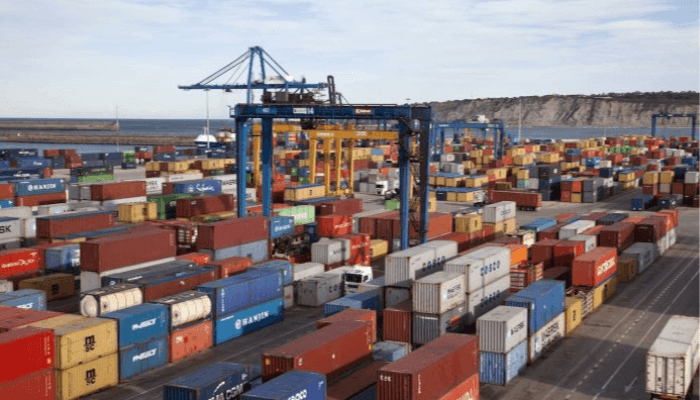
Nigeria's reliance on imported transport equipment and spare parts intensified in 2025, with the country spending approximately N6.54 trillion on this category, as detailed in the latest Foreign Trade Statistics report from the National Bureau of Statistics (NBS).
The figures reveal a consistent rise in transport equipment imports over the past four years, underscoring Nigeria's dependence on foreign vehicles, machinery, and spare parts for mobility, logistics, and industrial operations.
The data indicates that the recent increase in passenger car imports is largely influenced by exchange rate pass-through, as the naira's depreciation raises the local currency cost of imported vehicles. Despite rising prices, demand for vehicles for household, commercial, and ride-hailing purposes has remained resilient.
A closer examination of the import bill components highlights the trends driving this surge:
Passenger vehicles: Imports of passenger motor cars reached N1.58 trillion in 2025, up from N1.26 trillion in 2024. This follows N1.47 trillion in 2023 and N656 billion in 2022.
Industrial transport equipment: Imports of "Other transport equipment" amounted to N3.39 trillion in 2025, with industrial machinery constituting N2.66 trillion of this total. Non-industrial transport equipment accounted for N729 billion.
Spare parts and accessories: Nigeria imported N1.57 trillion worth of vehicle parts in 2025, an increase from N1.33 trillion in 2024 and N713 billion in 2023.
These rising import bills reflect the country's aging vehicle fleet and growing industrial activities that depend on imported machinery. Nigeria's total passenger car imports reached N527 billion in the third quarter of 2025, more than double the N254 billion recorded in the same period in 2024.
The United States, Dubai, and South Africa remain the primary import hubs for passenger cars entering Nigeria. Used vehicles alone accounted for N234.7 billion in the third quarter of 2025, with N184 billion of this figure originating from the United States.
Economists caution that the surge in transport equipment imports places additional pressure on Nigeria's foreign exchange reserves and highlights the slow pace of local industrialization. Analysts suggest that expanding domestic automobile assembly plants and strengthening local supply chains are crucial steps to reduce import dependence.
Meanwhile, Nigeria's overall import trade in the fourth quarter of 2025 reached N17.25 trillion. The top 10 trading partners accounted for N13.01 trillion, representing 75.41% of Nigeria's imports for the quarter, with China maintaining its position as the largest supplier.
In a separate development, the House of Representatives Committee on Finance has queried discrepancies in the reported volume of sugar imported into Nigeria and the revenue accruing to the National Sugar Development Council (NSDC). Chairman of the committee, Hon. James Faleke, noted that the figures presented by the NSDC might not reflect the actual volume of sugar entering the country. The Executive Secretary of the NSDC, Mr. Kamar Bakrin, clarified that the Nigeria Customs Service is responsible for collecting sugar levies, while the NSDC's role is primarily regulatory and advisory. Approximately two million metric tonnes of raw sugar importation were approved within the 2023–2025 fiscal years.
Additionally, the Federal Government is committed to strengthening the dairy sector to reduce reliance on imported milk. Minister of Livestock Development, Idi Mukhtar Maiha, stated that Nigeria spends approximately $1.5 billion annually on milk imports and another $1.5 billion on vaccines. The government aims to boost domestic milk production through public-private partnerships and by rehabilitating 417 grazing reserves.