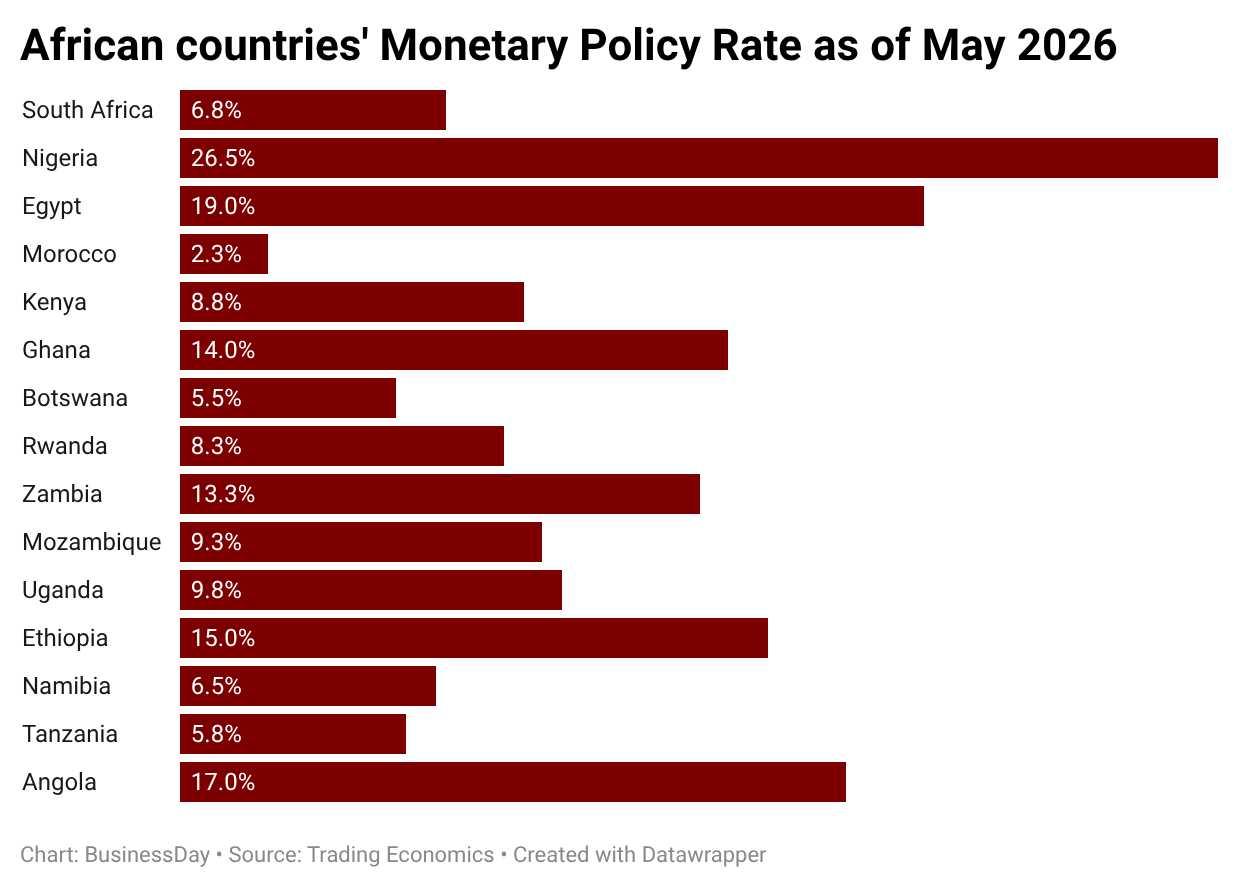
Nigeria may soon experience a decrease in interest rates as inflation shows signs of cooling, according to Finance Minister and Coordinating Minister of the Economy, Wale Edun. This development offers a glimmer of hope for easing the nation's strained finances, particularly concerning debt servicing.
Edun indicated that the possibility of interest rate cuts hinges on the continued downward trend of inflation. A reduction in rates could provide much-needed relief by lowering the cost of borrowing for the government and businesses alike. This comes as the World Bank projects a 5.6% growth for low-income countries, including Nigeria, partly attributable to easing inflation, according to its recent Global Economic Prospects report.
The World Bank anticipates global inflation to edge down to 2.6% in 2026. This projection reflects the influence of softer labour markets and lower energy prices worldwide. A lower global inflation rate typically allows central banks, including Nigeria's, more leeway to adjust monetary policy without the fear of exacerbating inflationary pressures. The global lender noted that per capita income growth in developing economies is projected to be three per cent in 2026, about a percentage point below its 2000-2019 average.
A decrease in interest rates could have a ripple effect across the Nigerian economy. Businesses might be encouraged to borrow and invest, potentially leading to job creation and increased economic activity. Consumers could also benefit from lower borrowing costs for loans and mortgages. Furthermore, reduced debt-servicing costs for the government could free up funds for critical infrastructure projects and social programs.
While the prospect of interest rate cuts is encouraging, analysts caution that the Central Bank of Nigeria (CBN) will likely adopt a cautious approach, closely monitoring inflation data and other economic indicators before making any decisions. The CBN will also need to consider the impact of rate cuts on the exchange rate and capital flows. Market watchers believe that a data-driven approach is crucial to ensure that any adjustments to monetary policy support sustainable economic growth without jeopardizing price stability. The interplay of these factors will ultimately determine the timing and magnitude of any potential rate cuts.