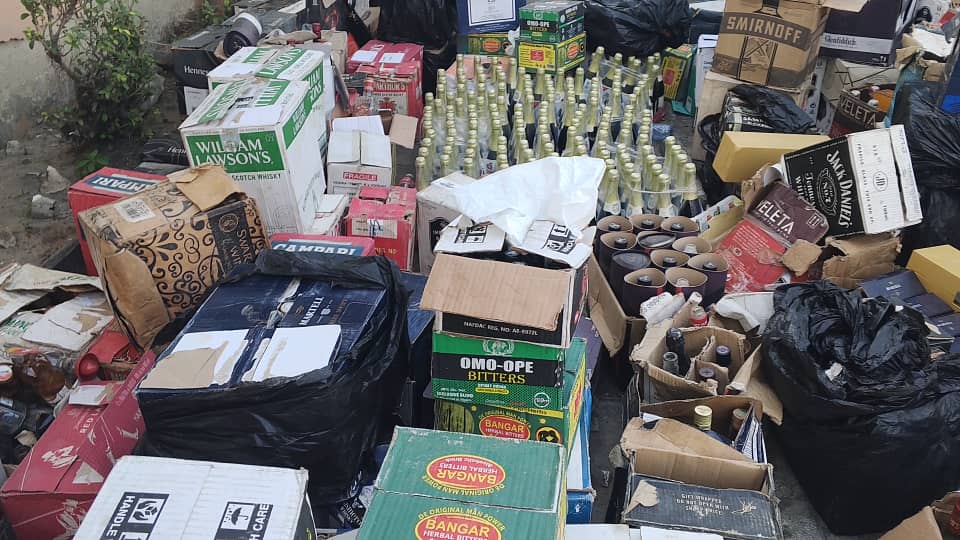
The National Agency for Food and Drug Administration and Control (NAFDAC), in collaboration with the National Orientation Agency (NOA) and the Federal Competition and Consumer Protection Commission (FCCPC), has initiated a nationwide enforcement campaign targeting the sale and distribution of sachet alcohol and alcoholic beverages packaged in bottles of less than 200 millilitres. This concerted effort aims to curb public health risks and reduce underage drinking across the country.
The announcement, made in a press release signed by NAFDAC Director-General, Prof. Mojisola Adeyeye, comes after the ban on sachet alcohol took effect in January, following a directive from the Nigerian Senate. The renewed enforcement drive is described by NAFDAC as a critical measure to protect Nigerian children from alcohol abuse.
Lanre Issa-Onilu, the Director-General of NOA, characterized the campaign as a vital preventive intervention. He emphasized its role in restricting access to cheap, high-strength alcohol for vulnerable groups within the population. The three agencies jointly issued a call to action, urging parents, community leaders, retailers, and the general public to adhere to the ban, underscoring that safeguarding children from harmful substances is a collective responsibility.
This enforcement action follows a significant transition period. In 2018, manufacturers were granted a five-year moratorium to gradually phase out the production of sachet alcohol and small, high-strength alcoholic beverages due to mounting public health concerns. The current nationwide campaign marks the culmination of this transition phase, signalling the commencement of more stringent regulatory actions and full compliance enforcement.
The urgency of this crackdown is underscored by data from a comprehensive 2021 nationwide survey on alcohol consumption patterns. The survey found that a concerning 54.3 per cent of minors were able to obtain alcohol independently. A significant portion of these minors reportedly purchased products in sachets and small bottles.
Further analysis from the survey revealed alarming consumption trends, including:
Age Range 10-19 Years: This demographic exhibited the highest prevalence of purchasing sachet alcohol at 62.3 per cent, with 58.7 per cent buying small-bottle products.
Overall Accessibility: The survey indicated that 49.7 per cent of respondents found it very easy to access sachet alcohol, and 42.8 per cent found it easy to access small-bottle alcohol.
Consumption Frequency: Across various age groups, frequent consumption of sachet and small-bottle alcohol was noted, highlighting widespread accessibility and ingrained consumption patterns.
These statistics paint a stark picture of the pervasive nature and accessibility of cheap, small-packaged alcohol, reinforcing the regulatory bodies' deep-seated concerns regarding its detrimental impact on young Nigerians and public health overall.