The escalating conflict between the United States, Israel, and Iran has sent shockwaves through the global oil market, pushing prices well over $100 per barrel and triggering widespread volatility in financial markets. As of March 10, 2026, Brent Crude was trading at $102.23 per barrel, and West Texas Intermediate (WTI) stood at $99.61 per barrel, marking a significant jump from previous levels.
The conflict has led to substantial disruptions in oil supply, with the strategically vital Strait of Hormuz, through which approximately 20 percent of the world's oil supply passes, effectively shut down. Reports indicate that maritime traffic has largely stalled since the war began on February 28, 2026. This has forced producers to halt pumping as storage facilities fill, leading to fears of prolonged supply shortages.
In response to the escalating prices and supply fears, United States President Donald Trump indicated that the military campaign is progressing ahead of schedule and suggested the conflict could end sooner than expected. He stated that Washington is exploring measures to stabilize global oil markets. Meanwhile, U.S. crude futures briefly surged above $119 per barrel earlier in the trading session before falling below $90 after Trump's remarks.
The Group of Seven (G7) nations, comprising Canada, France, Germany, Italy, Japan, the United Kingdom, and the United States, have reiterated their readiness to take necessary measures to support global energy supply. A meeting of G7 finance ministers and the International Energy Agency (IEA) on Monday, March 10, 2026, discussed the potential release of oil from emergency stockpiles. While no agreement to release reserves was reached, French Finance Minister Roland Lescure stated, "we are not there yet." The IEA head, Fatih Birol, noted that global oil markets "have deteriorated in recent days" due to transit challenges through the Strait of Hormuz and curtailed oil production.
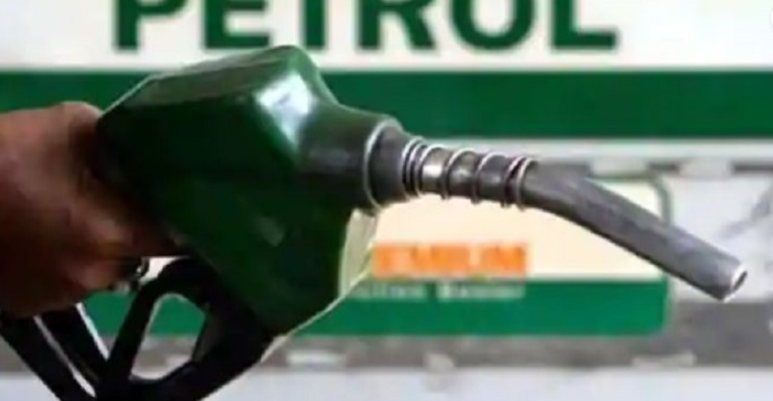
The implications of the soaring oil prices are being felt acutely in Nigeria. The Petroleum Products Retail Outlets Owners Association of Nigeria (PETROAN) had previously warned that the pump price of Premium Motor Spirit (PMS) could reach N2,000 per litre. Major marketers and filling stations in Nigeria have already adjusted fuel prices twice within a week. The Dangote Petroleum Refinery increased its petrol gantry price from N774 to N874 per litre on Monday, March 3, 2026, and revised it upwards again on Sunday, March 9, 2026, to N995 per litre. Across filling stations in Abuja, petrol was sold at N1,081 and above on Monday, March 10, 2026.
Amidst these global oil shocks, United Nations Secretary-General Antonio Guterres has advocated for a faster transition to homegrown renewable energy sources. He emphasized that dependence on fossil fuels has led to unsustainable volatility and that the quickest path to energy, economic, and national security lies in moving towards renewable energy. Guterres highlighted Africa's significant potential for renewable energy, citing abundant natural resources like water, sunshine, and wind. However, the continent faces challenges such as high capital costs, limited investment, geographic barriers, and supply chain constraints, slowing down renewable energy deployment. The EU has noted that 600 million people across Africa lack access to electricity, a situation expected to become more critical as Africa's population is projected to double by 2050.
The geopolitical tensions have also impacted global financial markets broadly. Stock markets slumped as oil prices soared. Seoul's Kospi closed down 6.0 percent, and Tokyo's Nikkei 225 shed more than 5.2 percent on March 10, 2026. European markets also opened deep in the red, and U.S. equity futures signaled a negative open. Kathleen Brooks, research director at trading group XTB, described the stock market as "a sea of red today." While discussions about strategic reserve releases provided some calm, she noted that "there are still upside risks to the oil price." Analyst Lee Hardman at Mitsubishi UFJ financial group suggested that a release of strategic reserves could cover two to three weeks of normal supply through the Strait of Hormuz, serving as a "temporary fix." Markets are concerned that the surge in energy prices will trigger inflation and slow global economic growth, leading to stagflation risks, a scenario of high inflation and economic stagnation.
In the FX space, the dollar remained supported by safe-haven demand, along with the Swiss franc. The Canadian Dollar, however, showed strength, appreciating against every G10 currency month-to-date due to its sensitivity to oil markets. In commodities, while oil prices jumped, gold ended the previous week in losses despite the risk-off sentiment and a disappointing Non-Farm Payrolls (NFP) report, which saw payrolls slide by 92,000 and the unemployment rate rise to 4.4 percent. Gold remains within a daily range due to a broadly stronger dollar and inflationary risks tied to the Middle East conflict.