The federal government has reiterated its target for the completion of the $1.9 billion Abuja-Kano-Maradi rail project by December of this year. This significant infrastructure undertaking is designed to bolster intra-African trade and serve as a crucial revenue generator along Nigeria's northern corridor.
Finbarr Zirra, director of rail transport services at the Federal Ministry of Transportation, highlighted the project's importance in revolutionizing economic activities, particularly in the northern region, upon its finalization. The project is currently reported to be about 70% complete.
The standard gauge line stretches approximately 400km, linking Kano in Nigeria with Maradi in Niger. It features 15 stations, traversing cities such as Dambatta, Kazaure, Daura, Mashi, Katsina, and Jibiya. The line extends to Maradi, located just 40km from the Nigerien border.
Zirra described the rail project as a critical piece of infrastructure essential for enhancing Nigeria's economic development. Kano is set to function as the primary hub for this ambitious project.
Initiated by the administration of the late former president Muhammadu Buhari, the rail project seeks to alleviate the strain on the nation's road networks. Currently, approximately 90% of goods are transported via trailers, a practice that significantly shortens road lifespans despite ongoing repairs.
The railway is engineered for a lifespan of at least 100 years, offering a forward-looking solution for the North West region's transportation needs. This initiative is integrated into a broader plan to connect national rail networks, extending from Lagos through Ibadan, Ilorin, and Minna to Abuja, and ultimately reaching Kano.
While the Abuja-Kaduna and Lagos-Ibadan rail sectors are already operational, substantial progress has been made on the Kaduna-to-Kano section. The segment from Makarfi to Kano is complete, and the ministry anticipates the Kaduna-to-Abuja link will be integrated by the year's end. Reports indicate that Chinese firms are managing the Abuja-Kaduna section, while Portuguese contractors are responsible for the Kano to Maradi line.
Beyond the physical infrastructure, the government is also focusing on the acquisition of rolling stock to service these routes. Zirra emphasized the potential impact of rail transport, noting that a single loaded train from Lagos to the North could remove approximately 30 trucks from the roads.
The project's design incorporates dry ports, including the Dala dry port in Kano, to ensure efficient cargo evacuation. As a historic commercial center, Kano's role as a hub connecting Katsina, Maradi, Kaduna, and Dutse is expected to reduce material costs and generate significant multiplier effects across various economic sectors.
In a separate development, the Kwara State Government has opened bids for the construction of processing and non-processing support facilities for its Agro-Industrial Hub in Malete, Moro Local Government Area. This initiative is part of the Special Agro-Industrial Processing Zones Project, supported by the Islamic Development Bank and other development finance institutions.
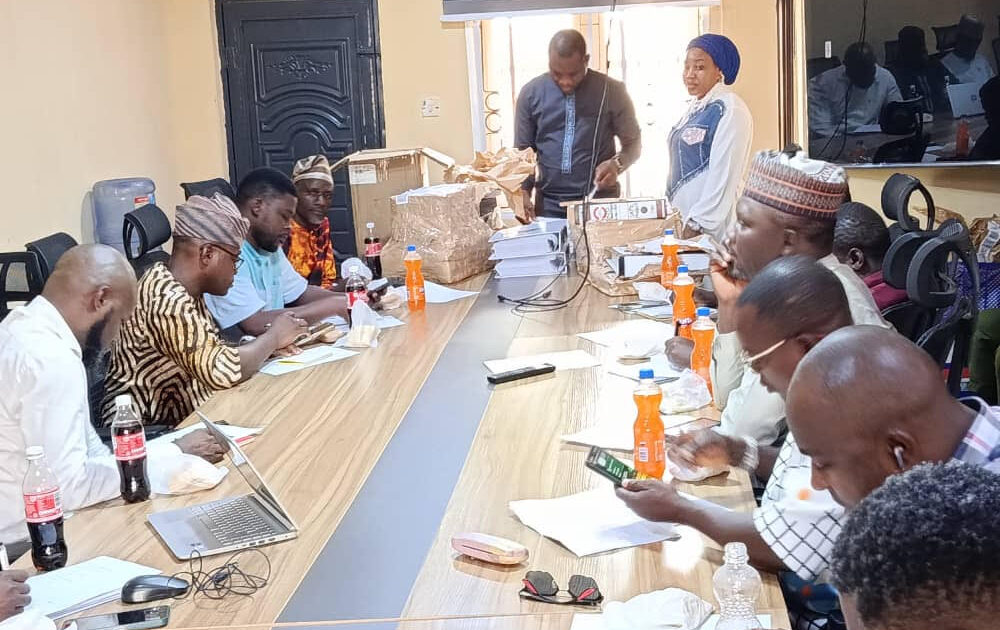
The KW-SAPZ Project Coordinator, Busari Isiaka, stated that the bid opening was conducted in full compliance with Islamic Development Bank procurement guidelines. Out of eight bidders who purchased documents, only four submissions were received and publicly opened: RTD Thomson Ltd, DPL Construction, RSA Global Services Ltd, and Afdin Construction Ltd.
The Special Agro-Industrial Processing Zones Project aims to establish agro-industrial hubs across Nigeria to enhance agricultural value addition, create jobs, and stimulate rural economic development. Kwara State's SAPZ is located in Malete, near Kwara State University, and is designed to process agricultural products, attract private investment, and generate employment.