Analysts have voiced concerns regarding the Federal Government’s intentions to sell selected state-owned assets and enterprises to private investors in 2026. According to these experts, the initiative appears to be more focused on revenue generation than on implementing necessary structural reforms.
The government's recent announcement that it would begin divesting from certain public assets next year is part of a broader effort to deepen economic reforms and attract private capital. However, experts speaking to Nairametrics suggest that the policy’s framing indicates a stronger emphasis on addressing budget deficits rather than tackling inefficiencies, institutional weaknesses, and ensuring optimal asset utilization.
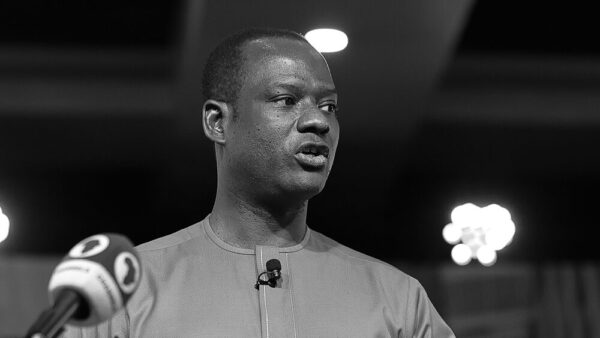
In an exclusive interview with Nairametrics, the founder and Chief Executive Officer of the Centre for the Promotion of Public Enterprise (CPPE), Dr. Muda Yusuf, stated that while the rationale behind asset sales is fundamentally sound, the way it is being presented raises concerns. Yusuf questioned the messaging around financing deficits through asset sales, arguing that the government should instead emphasize efficiency gains and value creation.
Similarly, university researcher Dr. Kelvin Madunagu cautioned against treating asset disposal as a short-term fiscal solution.
Yusuf maintained that selling assets to raise liquidity may be preferable to increased borrowing. However, he highlighted concerns about transparency and due process, referencing past allegations of assets being sold to politically connected individuals at questionable valuations.
Madunagu also stressed the importance of labor protections in any divestment plan, including retraining programs and severance guarantees. He further noted that strategic sectors such as power, energy, transport, and security-linked industries may require alternative models.
The Federal Government’s asset sale plan is expected to boost liquidity, reduce reliance on borrowing, and potentially improve efficiency in key sectors. However, analysts warn of significant risks.
Experts argue that without strong governance, transparent valuation processes, and broader fiscal reforms, the exercise could fail to address Nigeria’s underlying structural and fiscal challenges.
Nairametrics reported on February 10 that the Federal Government plans to commence the sale of selected state-owned assets in 2026.
Speaking on the sidelines of the AlUla Conference for Emerging Market Economies in Saudi Arabia, Minister of Finance and Coordinating Minister of the Economy, Wale Edun, said the government is reviewing its portfolio of public assets to determine which ones will be offered for sale, as well as the timeline and structure of the divestment.
According to him, the proposed asset sales form part of the Tinubu administration’s broader strategy to optimise government-owned assets, improve efficiency, and position Nigeria as a more competitive destination for private investment.