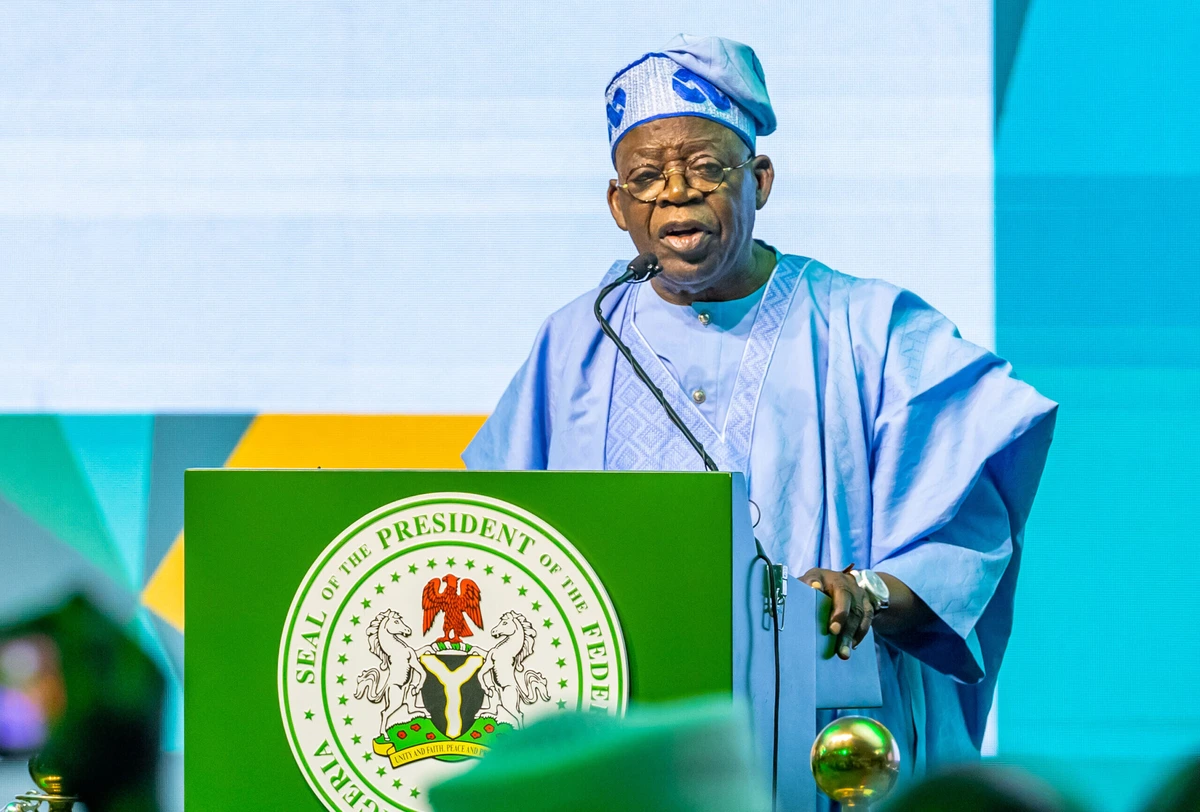
The Nigerian National Petroleum Company Limited (NNPCL) is potentially facing liquidity challenges following President Bola Tinubu's executive order mandating the direct remittance of oil and gas revenues to the Federation Account. According to analysts, this order, signed on February 18, 2026, could significantly impact the company's operational flexibility.
According to experts, stripping the national oil company of certain revenue retention mechanisms may weaken its ability to meet financial obligations to vendors and investors, and potentially disrupt operations.
Dr. Muda Yusuf, founder of the Centre for the Promotion of Private Enterprise (CPPE) and former Director-General of the Lagos Chamber of Commerce and Industry (LCCI), expressed concern about the cash-flow implications for NNPCL. He warned against subjecting NNPCL to the envelope budgeting system, describing it as bureaucratic and prone to delays.
Dr. Joseph Obele, energy expert and National Public Relations Officer of the Petroleum Products Retail Outlets Owners Association of Nigeria (PETROAN), warned that the move could weaken operational flexibility and discourage long-term capital investment. He also suggested workforce reductions could follow as part of cost-cutting measures.
Analysts argue that overriding Sections 8, 9, and 64 of the PIA could introduce regulatory uncertainty and elevate investment risk perceptions, potentially discouraging foreign investors from committing long-term capital to Nigeria’s oil and gas sector.
Despite concerns, the policy presents potential benefits, including improved transparency and accountability as direct remittance reduces off-budget deductions and enhances public oversight of petroleum revenues. The executive order may compel NNPCL to operate strictly as a commercial entity, focusing on profitability and cost efficiency.
The federal government said the executive order signed by the president is designed to realign oil and gas revenue flows with constitutional provisions, curb leakages, and strengthen fiscal transparency amid declining inflows into the Federation Account despite improved production and favorable market conditions.
Also, the Nigeria Union of Petroleum and Natural Gas Workers (NUPENG) called on President Bola Tinubu to urgently convene a broad-based stakeholders’ meeting to clarify the details of the Executive Order he signed on Wednesday concerning the nation’s oil and gas industry.
Presidency's Defense
The Presidency has defended Executive Order 9 (EO9), describing it as a constitutional instrument aimed at safeguarding public revenues. The government argues that criticisms suggesting that EO9 amounts to the President “making law” misrepresent both the 1999 Constitution (as amended) and the fiscal issues at stake. According to the statement issued by President Tinubu’s Special Adviser on Media and Public Communication, Sunday Dare, “Commentary suggesting that Executive Order 9 (EO9) amounts to the President ‘making law’ misstates both the Constitution and the fiscal question at issue. EO9 does not create law; it enforces constitutional custody of Federation revenues.”
Mr. Tinubu signed the order directing that royalty oil, tax oil, profit oil, profit gas, and other revenues due to the Federation under production-sharing, profit-sharing, and risk-service contracts be paid directly into the Federation Account.
The order also scrapped the 30 per cent Frontier Exploration Fund established under the Petroleum Industry Act (PIA) and discontinued the 30 per cent management fee on profit oil and profit gas retained by the Nigerian National Petroleum Company Limited (NNPCL).
Anchoring the directive on Sections 5 and 44(3) of the 1999 Constitution (as amended), the presidency said the move was aimed at safeguarding oil and gas revenues, curbing what it described as excessive deductions, and restoring the constitutional entitlements of federal, state, and local governments to the federation account.
Presidential spokesperson Bayo Onanuga had earlier stated that under the current PIA framework, NNPCL retains 30 per cent of oil and gas profit as a management fee and another 30 per cent for frontier exploration, significantly reducing net inflows to the federation account.
The Petroleum and Natural Gas Senior Staff Association of Nigeria (PENGASSAN) last Thursday rejected President Bola Tinubu’s newly signed executive order mandating the direct remittance of oil and gas revenues to the Federation Account, describing the directive as a dangerous precedent that could undermine the PIA and erode investor confidence in the sector.
The government maintained that the order merely enforces existing constitutional provisions governing the custody and management of federation revenues. Citing Section 80(1) of the constitution, the presidency noted that “all revenues or other moneys raised or received by the Federation shall be paid into and form one Consolidated Revenue Fund of the Federation,” stressing that public funds cannot lawfully be retained or applied outside constitutionally recognised accounts.
It also referenced Section 162, which requires revenues accruing to the federation to be paid into the federation’s account for distribution in line with constitutional allocation principles.