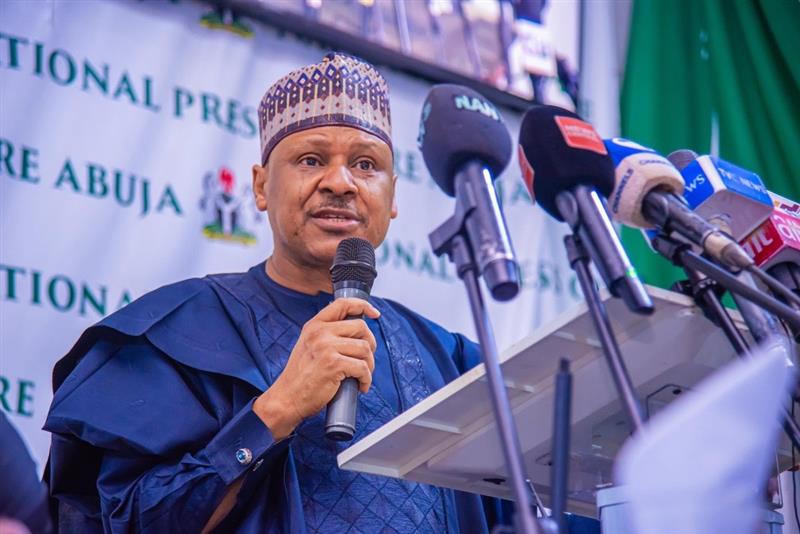
The Minister of Information and National Orientation, Mohammed Idris, has stated that Nigeria is prepared to contribute its oil to help ease global tension.
Idris made these remarks during an interview with BBC Africa, on the sidelines of President Bola Tinubu’s visit to the United Kingdom.
The minister's comments were published on X on Wednesday night, following the ongoing United States–Israeli war against Iran, which has led to a global oil shortage.
What the minister is saying
When asked if Nigeria would be willing to supply its oil amidst the Middle East conflict, Mohammed responded affirmatively.
- “We, as Nigerians, are always desirous of joining hands with people all over the world.
- Nigeria is ever ready to contribute to energy security around the world. Whatever Nigeria can do to help ease the tension, it will, of course, do that.
- The world needs oil. Nigeria is there. We will continue to ensure the world gets more Nigerian oil where necessary,” Mohammed said.
Backstory
The Nigerian Economic Summit Group (NESG) has projected that escalating geopolitical tensions in the Middle East could deliver a massive oil revenue windfall to Nigeria, potentially reaching as high as N30.2 trillion if the conflict between Iran and Israel becomes prolonged.
This was disclosed in a report titled “Boom Not Gloom: Nigeria’s Optimal Policy Response to the US/Israel-Iran War,” released last week by the policy think tank.
The report assesses the potential economic impact of rising geopolitical tensions involving the United States, Israel, and Iran on oil-producing economies such as Nigeria, noting that higher global crude prices could significantly boost Nigeria’s export earnings.
NESG stated that the ongoing conflict presents Nigeria with a rare but time-sensitive opportunity to strengthen its macroeconomic position by leveraging rising oil prices.
What you should know
The Middle East conflict worsened this week following a strike on QatarEnergy’s facilities.
- Qatar’s Minister of State for Energy Affairs and CEO of QatarEnergy, Saad al-Kaabi, said that Iran’s attacks on Qatar’s energy infrastructure have wiped out an estimated $20 billion in annual revenue and knocked out a significant portion of the country’s liquefied natural gas (LNG) export capacity.
- This was reported by Reuters, citing an exclusive interview with Saad al-Kaabi.
According to the report, Iran’s recent attacks have knocked out about 17% of Qatar’s LNG export capacity, with repairs expected to sideline 12.8 million tonnes per year of LNG output for between three and five years.
The scale of the disruption threatens supplies to major markets in Europe and Asia.