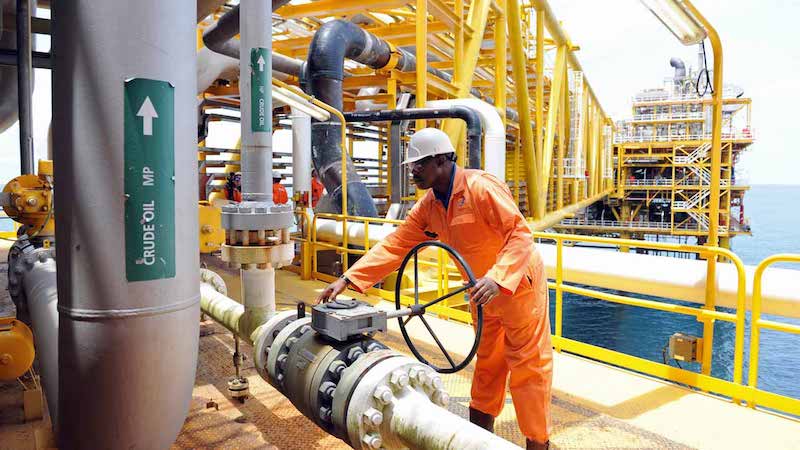
Nigeria’s oil and gas industry attracted $17.98 million in capital inflows in 2025, a sharp increase from the $5.12 million recorded in 2024. This is according to the latest capital importation report released by the National Bureau of Statistics (NBS).
The uptick signals a gradual return of investor interest in the country’s hydrocarbon sector despite global pressure on fossil fuel investments. The data highlights Nigeria’s increasing pivot toward natural gas as a transition fuel and a key foreign exchange earner.
The NBS figures show that oil and gas inflows more than tripled year-on-year, from $5.12 million in 2024 to $17.98 million in 2025.
Meanwhile, gas export earnings climbed by 21% in the same period, highlighting the growing contribution of gas to Nigeria’s foreign exchange reserves. The increase reflects renewed investor confidence in Nigeria’s hydrocarbon sector amid regulatory clarity and policy reforms.
Analysts attribute the improvement to investor confidence driven by regulatory clarity, targeted incentives, and the Federal Government’s support for the gas sector under its “Decade of Gas” strategy.
The rise in capital inflows coincides with a strong performance in the gas sector, with the Central Bank of Nigeria (CBN) reporting a 21% growth in gas export earnings to $10.51 billion in 2025, up from $8.66 billion in 2024.
The Nigerian Upstream Petroleum Regulatory Commission (NUPRC) recently launched a Gas Development Roadmap aimed at commercializing over 55 trillion cubic feet of unutilized gas reserves.
The initiative is designed to unlock investment across the gas value chain, including exploration, processing, transportation, and export infrastructure.
Historically, capital inflows into Nigeria’s oil and gas sector have been volatile, affected by global oil prices, security concerns in oil-producing regions, and regulatory uncertainties. The 2025 inflows suggest early signs of recovery, but they remain modest compared to the sector’s full potential.
Gas is increasingly becoming a strategic pillar in Nigeria’s energy and economic planning, supported by policy initiatives and rising global demand.
Recently, Nairametrics reported that non-oil exports also rose to N12.36 trillion in 2025, driven by agriculture, manufacturing, and solid minerals. The figure represents a sharp increase from N9.09 trillion recorded in 2024, highlighting stronger export performance outside the country’s oil sector.
Recently, the Nigerian National Petroleum Company Limited said it plans to grow Nigeria’s gas reserves from the current 210 trillion cubic feet to about 600 trillion cubic feet. The NNPCL also noted that it is working on its mandate to attract about $60 billion in investments into the gas sector.