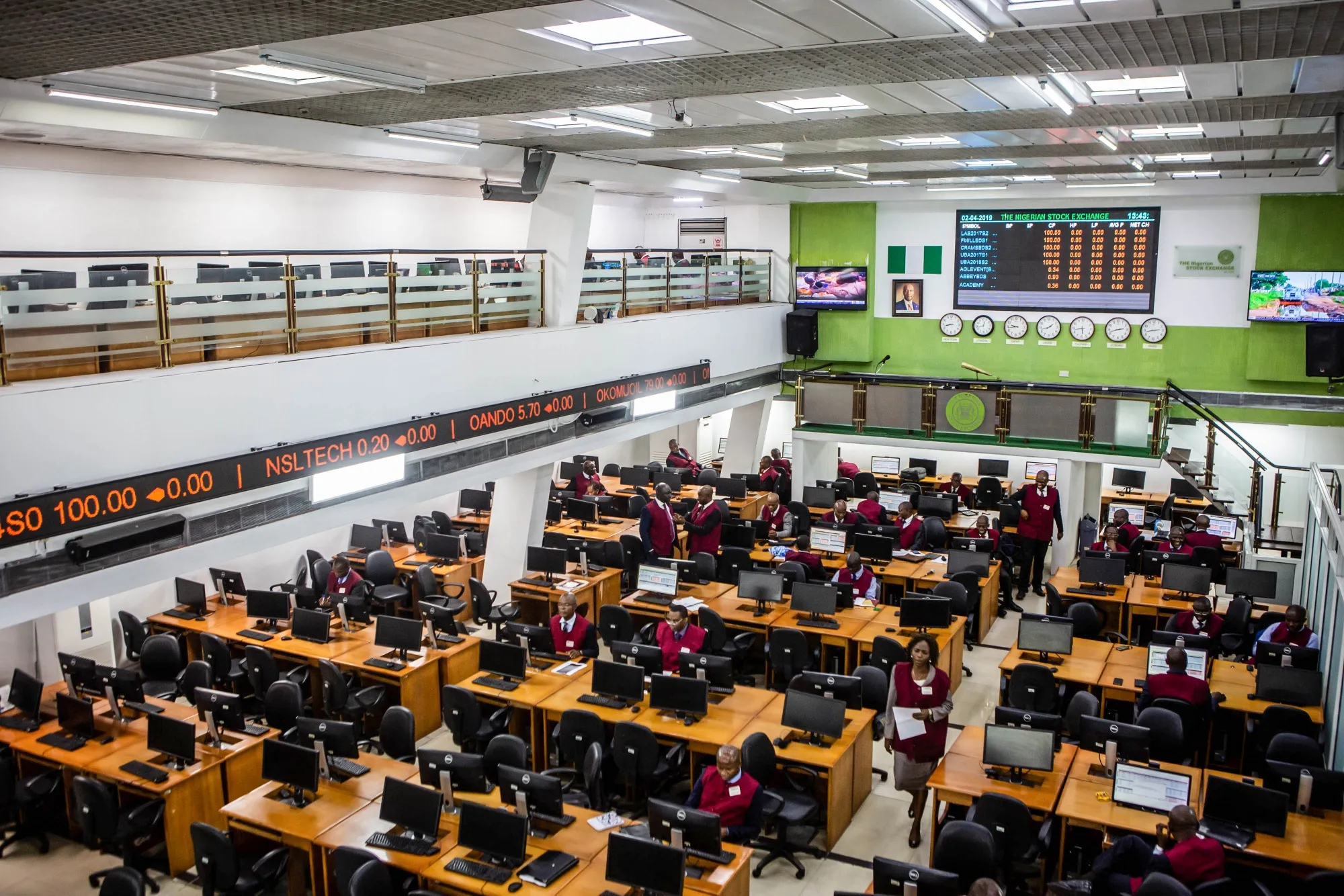
The Nigerian Exchange (NGX) experienced a sharp selloff in banking stocks on Monday, April 27, 2026, as investors exited positions over dividend concerns. This led to approximately N1.3 trillion in losses, overshadowing the first day of extended trading hours.
Market data for April 27, 2026, showed the All-Share Index (ASI) declined by 0.94% to 223,602.29 points. This pulled the year-to-date return down to +43.69% and erased approximately N1.3 trillion from the market capitalization, which closed lower at N143.97 trillion.
Total volume traded rose to 678.17 million units across 82,838 deals, with a market value of N44.14 billion. This reflects the impact of longer trading hours that commenced on Monday, as well as heightened sell pressure across key banking names.
Market participants attributed the sharp downturn to dividend-related concerns and delayed earnings by some banks. Analysts noted that sentiment remained weak despite the structural shift introduced by extended trading hours.
David Adonri, Vice Chairman of Highcap Securities Limited, stated, “There was remarkable turnover volume today… but the banking sector declined by 6.49%, which is massive. It was driven largely by UBA going on full offer and investors exiting positions in Access Bank and others.” He added that the development had little to do with the newly introduced extended trading hours.
Aruna Kebira, Managing Director/CEO of Globalview Capital Limited, commented, “The market is reacting to UBA’s inability to pay dividends due to regulatory forbearance. Investors are now pricing in the risk that other banks like Access, Fidelity, and First HoldCo may face similar constraints.” Kebira, however, noted that the reaction may be exaggerated, stressing that delays in financial reporting do not necessarily indicate weak fundamentals.
He pointed out that GTCO, Zenith, Wema, Stanbic, among others, declared increased payouts to shareholders, insisting that the fundamentals of the banking system remain strong and should not be judged by isolated developments.
Trading data shows that banking stocks were the primary drivers of the market decline, recording steep losses across major counters. The negative sentiment persisted despite increased trading activity linked to the extended hours.
In a separate development, investor participation in the Nigerian stock market hit an all-time high in Q1 2026, with total transactions soaring to N4.14 trillion, more than double what was recorded a year ago. This trend suggests the market could be on track to break the 2025 record of N11.92 trillion in total transactions.
Meanwhile, Exchange Traded Funds (ETFs) listed on the Nigerian Exchange (NGX) recorded a broadly negative performance in the week ended April 24, 2026. The SIAML Pension ETF 40 led the losers after plunging 40.29% to N7,343.15, as all tracked ETFs closed in the red.
Data compiled by Nairametrics Research shows that while total trading volume increased week-on-week, the total value of transactions declined, indicating reduced participation in higher-value trades despite increased activity. The SIAML Pension ETF 40 traded just 6,193 units during the week, the lowest of any ETF tracked, suggesting that small transaction numbers can dramatically move prices due to illiquidity.